
Picture standing on the edge of a revolution in computing—a landscape shaped by the enigmatic principles of quantum mechanics. This isn’t just a shift in technology; it’s a profound change in how we think about computation itself. Welcome to the world of Quantum Programming Languages (QPLs), an exploration of possibilities where algorithms tap into the fundamental quirks of nature, providing solutions that push beyond our classical understanding of what computers can do.
Quantum Programming Languages serve as the bridge between the abstract world of quantum phenomena and the practical realm of coding. Languages like Microsoft’s Q#, IBM’s Qiskit, and Google’s Cirq enable us to interact with the very building blocks of reality—quantum bits, or qubits. These languages aren’t just tools; they’re keys unlocking new realms of computation where each qubit holds the potential to transform industries from cryptography to drug discovery and artificial intelligence.
Venturing into the realm of QPLs is like walking through a vast, unexplored forest where each concept reveals a unique path to understanding. Here, algorithms are not written in black and white, but in shades of possibility, reflecting the inherent uncertainties of quantum mechanics. Mastering these languages involves more than logic; it is an exercise in intuition and creativity, much like teaching a computer to dance rather than march.
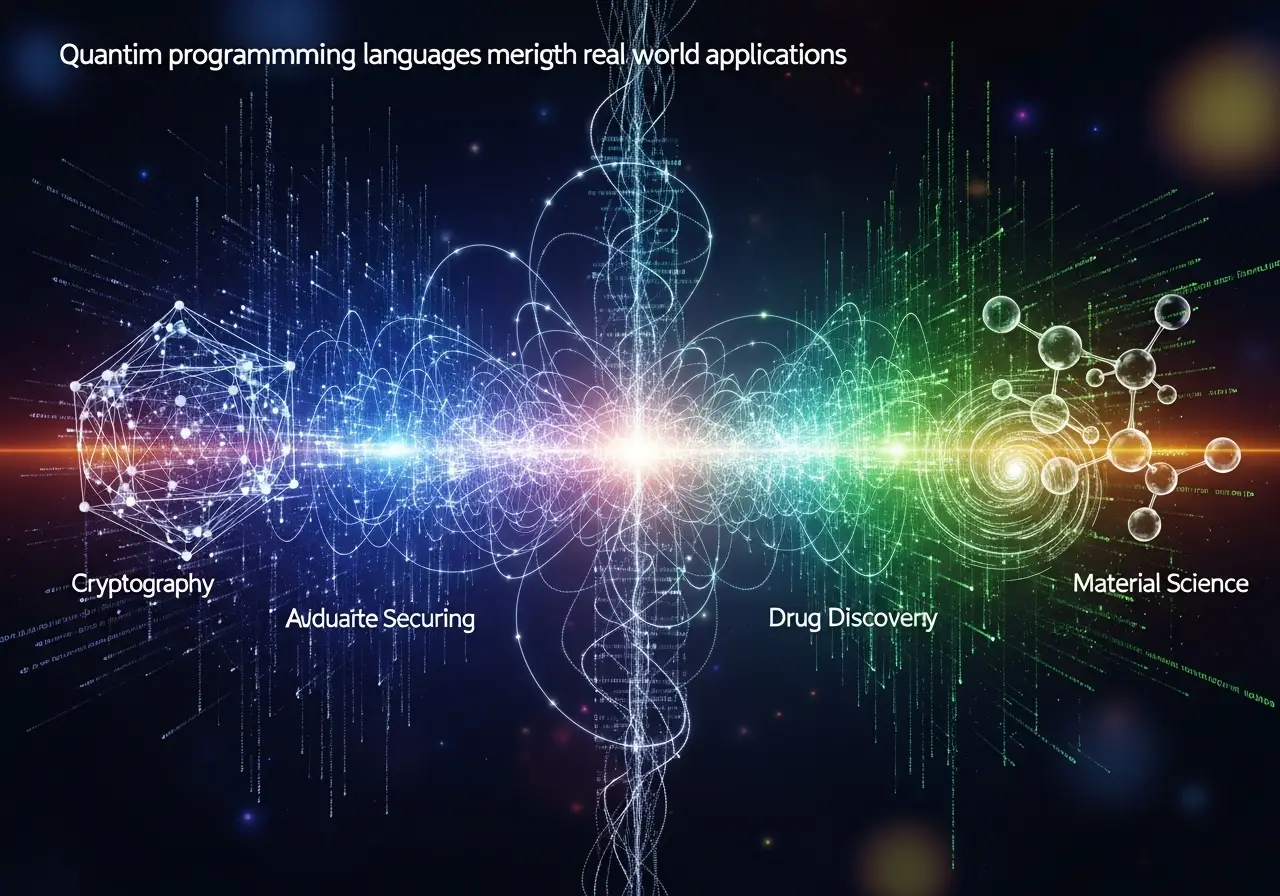
Why does this all matter? The implications of QPLs are tremendous, promising breakthroughs with real-world impact. Imagine cryptographic codes so secure they become unbreakable, or drug discovery processes that take days instead of decades, revealing new treatments previously hidden from view. With Quantum Programming Languages, the boundaries of computing stretch toward near-limitless horizons.
Importantly, the accessibility of QPLs is growing, inviting an ever-wider community to join this technological frontier. Educational resources are blossoming, enabling curious minds to delve into quantum mechanics without needing a supercomputer or a PhD. This accessibility heralds a new era where creativity and collaboration reshape our approach to complex challenges.
However, this new power comes with a responsibility. As we explore the exciting prospects of QPLs, we must also remain mindful of ethical considerations, such as privacy and data security. Navigating these issues carefully ensures that our advancements remain beneficial and equitable.
In essence, Quantum Programming Languages challenge us to not only learn new coding techniques but also to rethink our relationship with the universe. As pioneers in this field, we have the opportunity to influence both technology and society positively. Each quantum algorithm we create doesn’t just solve problems—it redefines them, shaping our future in the process. As you embark on this quantum journey, remember that you are contributing to an unprecedented narrative, where the music of mathematics and the art of logic come together to craft the future.