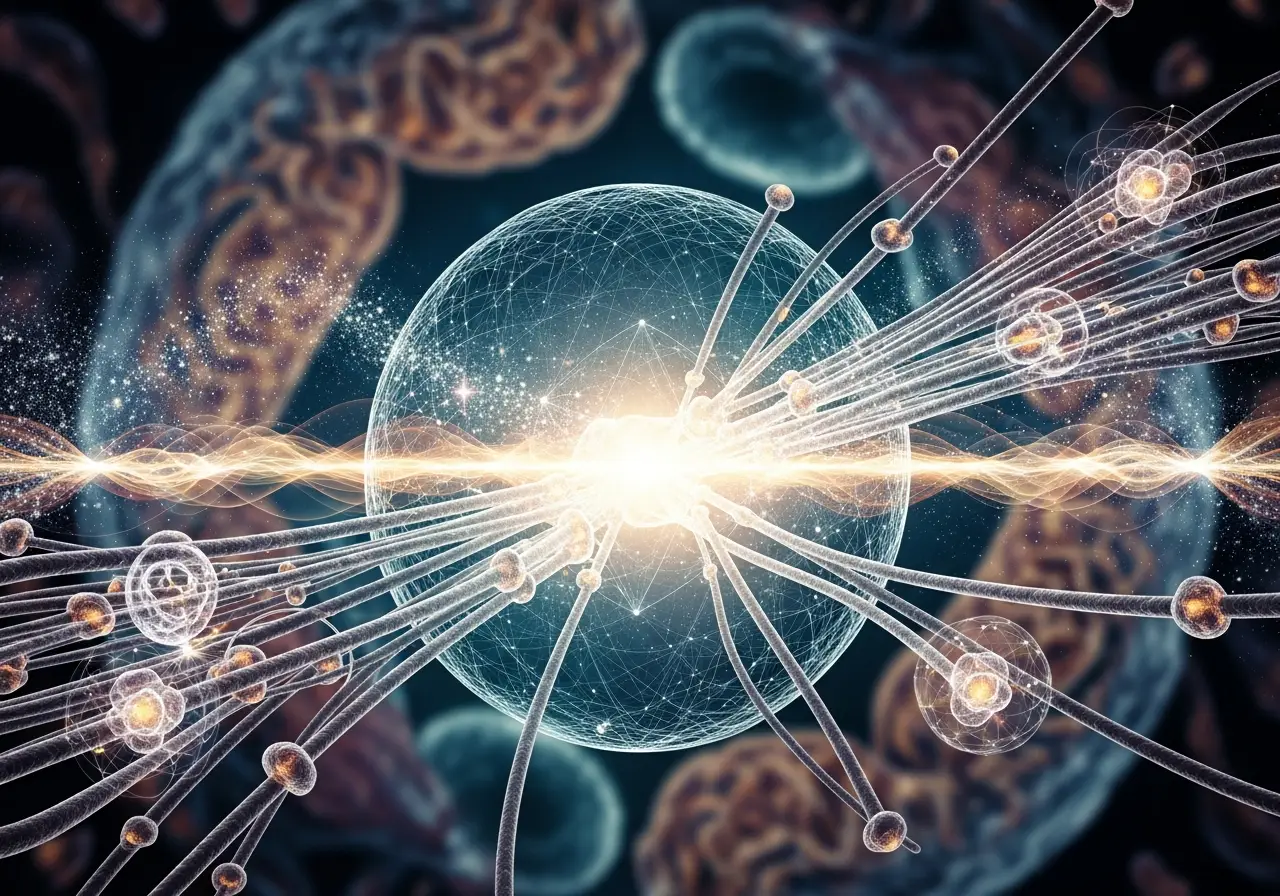

The tiny structures within our cells, microtubules, are much more than their initial understanding as mere supports and conduits. Recent findings suggest they might play a pivotal role in the way cells communicate and operate harmoniously—a dance of communication and coherence that extends beyond traditional biological roles. Consider them as intricate communication cables within the cellular world, vital for maintaining not just physical structure but also a network of situational responses and coherence.
Beyond their known functions, some scientists propose a fascinating theory: microtubules might participate in quantum coherence, akin to phenomena observed in quantum physics where elements interact across distances in unison. This could mean these structures are not only crucial to how cells function but may also serve as a fundamental link in understanding consciousness—a bridge beneath the observable brain activities, potentially connecting our thoughts to a broader network of the universe.
The notion that microtubules might influence consciousness introduces a profound dimension to their role. Suppose these structures allow our brains to process information like a symphony where different instruments (or brain regions) contribute to a cohesive melody. In that case, they become more than the sum of their mechanical parts—potentially pivotal in crafting our conscious experience.
Exploring microtubules provides insight not only into cellular mechanics but extends to broader philosophical questions about human identity and consciousness. While the idea is captivating, scientific exploration requires a balanced approach—embracing curiosity while adhering to rigorous evidence-based research. Understanding these roles could transform perspectives on mental health and cognitive functions, offering new strategies for addressing neurodegenerative diseases and enhancing mental well-being.
As we delve deeper into the study of microtubules, their uncovering secrets could change how we perceive both our internal world and our place within the universe—as vibrant links in a chain of life that is far more interconnected than previously imagined. As these structures reveal more about their roles within the dance of life, they might not only illuminate biological processes but also inspire a more profound understanding of consciousness itself.