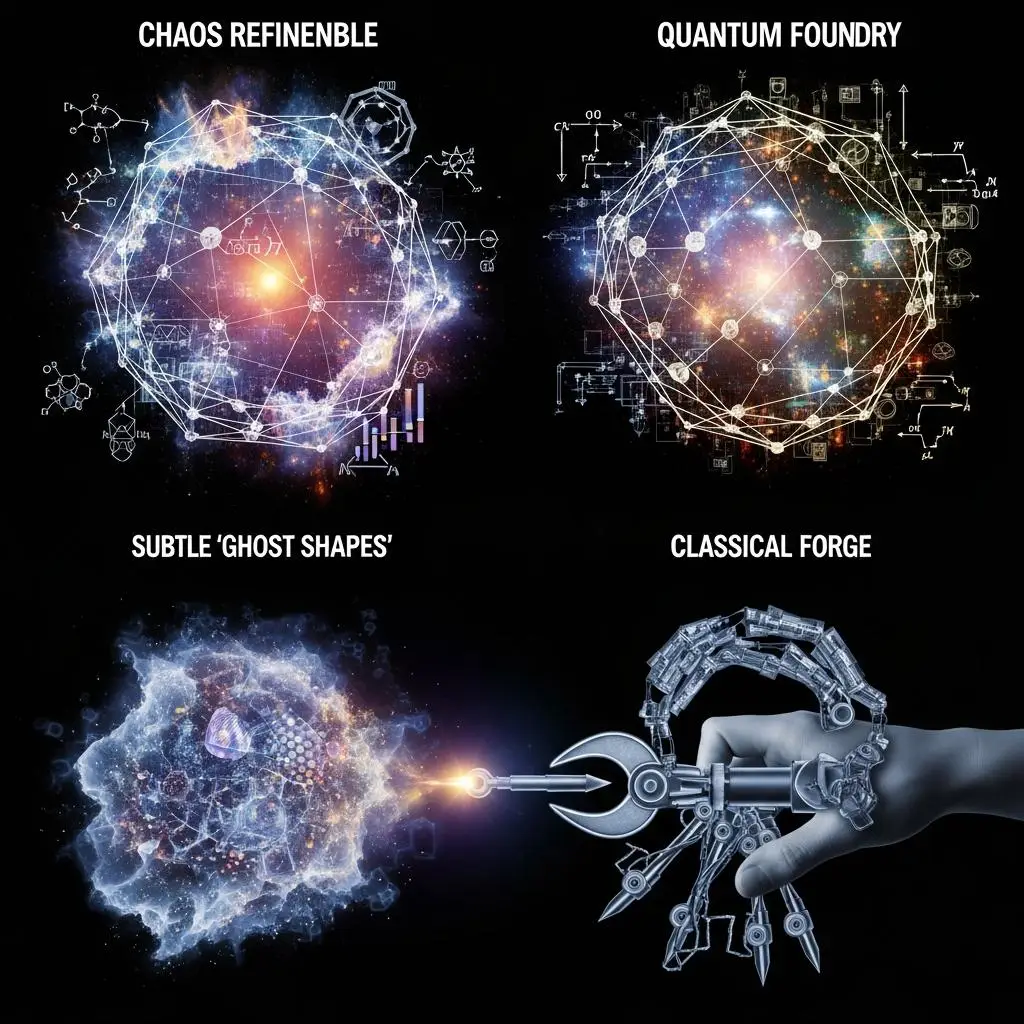

We’re building the quantum present, dealing with the messy chaos of Noisy Intermediate-Scale Quantum (NISQ) devices. The core challenge is making these notoriously fickle qubits do something genuinely useful. It’s about treating the hardware not as a pristine theoretical model, but as a hostile substrate—a battlefield where every gate operation is a calculated risk.
Harnessing the Superposition of Waves
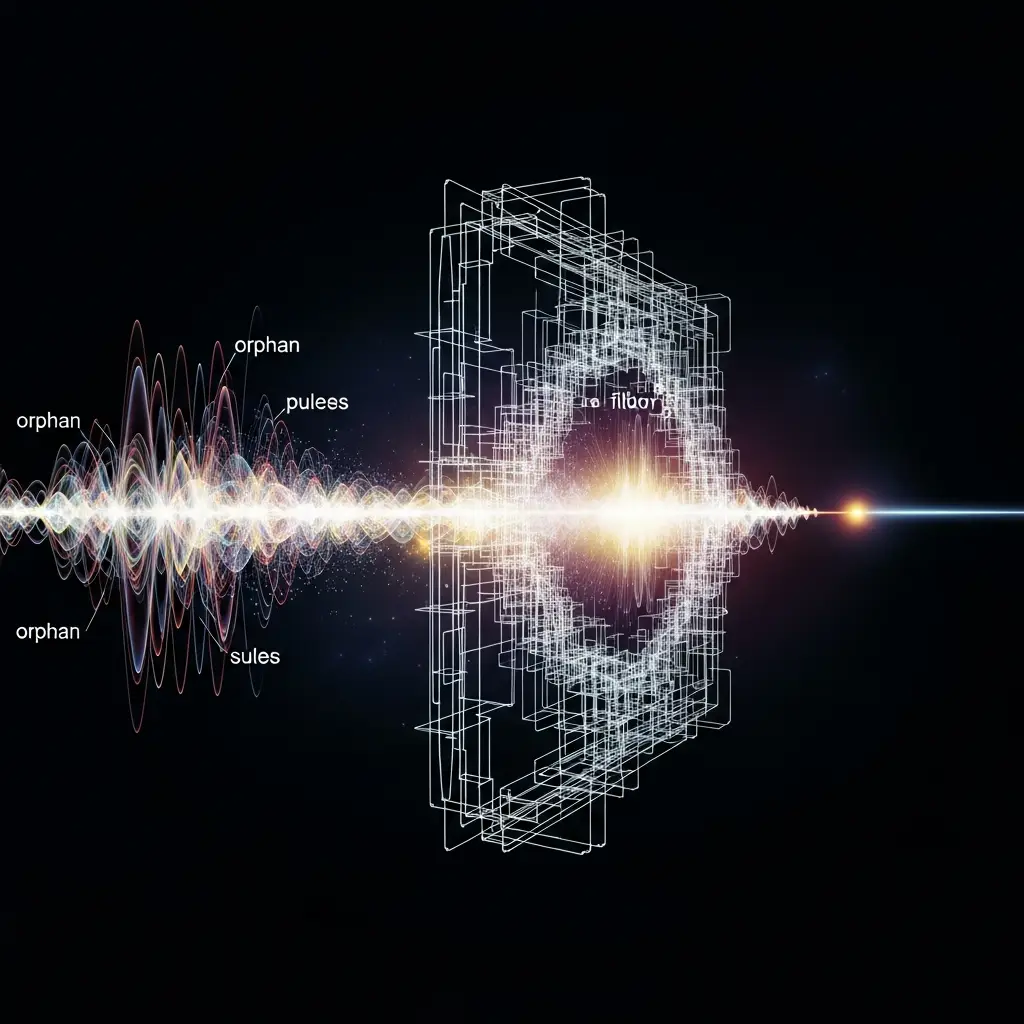
Our approach hinges on a fundamental re-framing of how we interact with quantum hardware, moving beyond “quantum supremacy” towards a pragmatic, device-centric engineering. We’re talking about H.O.T. (Hardware Optimized Techniques) architecture, viewing the underlying physics of qubit interaction, particularly the delicate dance of the “superposition of waves”, as tangible parameters to be managed.
Wave Superposition Embodied
The real magic lies in our recursive geometric circuitry. Instead of laying out gates in a flat, sequential manner, we embed computations within self-similar patterns of entangling operations. Coherent calibration errors, which plague flat circuits, tend to anti-correlate across these layers, partially canceling each other out. This recursive geometry isn’t just for show; it’s a form of gate-level error mitigation baked into the circuit’s very fabric.
Waveform Superposition Realized
This means we can start tackling problems that were previously relegated to the realm of theoretical impossibility for current hardware. We’re talking about demonstrating non-trivial instances of the Elliptic Curve Discrete Logarithm Problem (ECDLP) using Shor- and Regev-style constructions. Our work demonstrates that meticulous quantum programming can pragmatically extend the operational boundary of today’s hardware.
Leveraging the Superposition of Quantum Waves
This isn’t about hype; it’s about pragmatic engineering. It’s about understanding that the fundamental properties of quantum mechanics, particularly the inherent “superposition of waves”, can be both a source of fragility and a powerful tool for resilience when wielded with precision. We’re building a toolkit for practitioners, a set of techniques for wresting utility from the hardware we have *now*.
For More Check Out