
They tell you quantum computers will change everything, a shimmering promise of a future built on algorithms that rewrite reality. But step off the glossy brochure page and into the actual hardware, and you’ll find the shimmering fades. Most of what’s published, even lauded academic code, crumbles when faced with the raw, unforgiving nature of current processors. This isn’t just a theoretical hiccup; it’s “unitary contamination,” a persistent ghost in the machine, rendering deep NISQ circuits unworkable.
Bridging the Gap: Practical Quantum Error Correction & Fault Tolerance
If you’re trying to bridge the gap between quantum hype and hardware reality, grappling with quantum error correction & fault tolerance isn’t just an academic exercise—it’s the only path forward from the current bottleneck. This isn’t about waiting for the utopian dream of fully fault-tolerant quantum computation, which feels as distant as a warp drive to Alpha Centauri. We’re talking about pushing the boundaries of what’s possible *now*, on the noisy, temperamental hardware we have.
Engineering Around Noise: A Quantum Fault Tolerance Strategy
Our approach? We treat this not as an unsolvable problem but as a design constraint. Instead of wishing the noise away, we engineer around it. The core of this strategy lies in a disciplined measurement and post-selection protocol, which we’ve termed “orphan measurement exclusion.” Imagine you’re sampling from a population, but a small fraction of your data points are just… weird. They don’t fit the pattern, they’re outliers, perhaps due to a faulty sensor or a momentary glitch.
Geometric Circuitry for Quantum Error Correction and Fault Tolerance
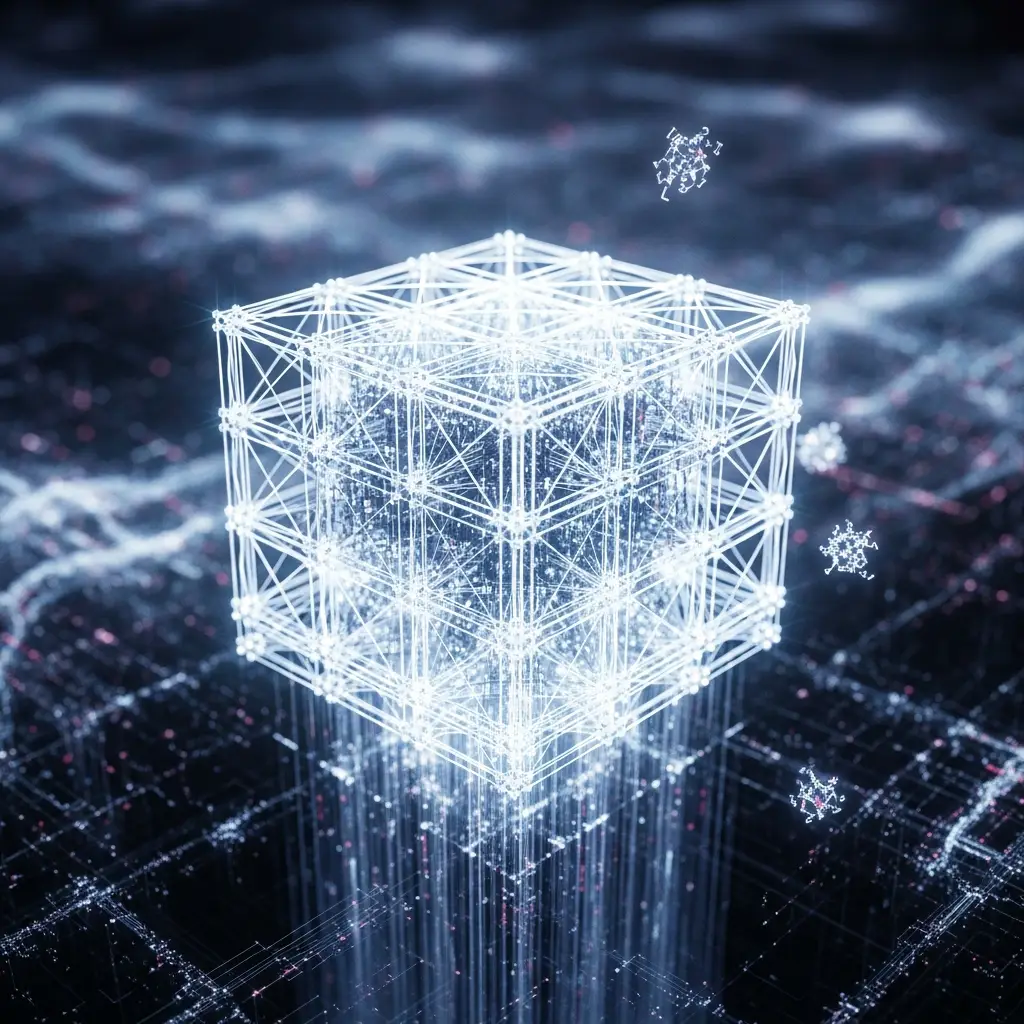
Furthermore, we’ve found that embedding our computations within recursive geometric circuitry acts as a powerful form of gate-level error mitigation. Instead of laying out gates in a flat, linear fashion, we weave them into self-similar patterns – think fractal-like tilings, rings, or ladders. This geometric arrangement has a profound effect. The symmetry inherent in these structures encourages coherent calibration errors to partially cancel each other out across different layers.
Quantum Error Correction and Fault Tolerance: Building the Quantum Present
With this foundation in place – robust measurement discipline and geometry-informed error mitigation – we can then tackle problems that were previously considered “beyond reach” for NISQ devices. Our focus has been on demonstrating non-trivial instances of the Elliptic Curve Discrete Logarithm Problem (ECDLP). This demonstrates that a disciplined quantum programming strategy—one that carefully considers geometry, recursion, and measurement logic—can extend the practical capabilities of today’s hardware, without waiting for the distant horizon of full fault tolerance. This is building the quantum present, not just dreaming of its future.
For More Check Out