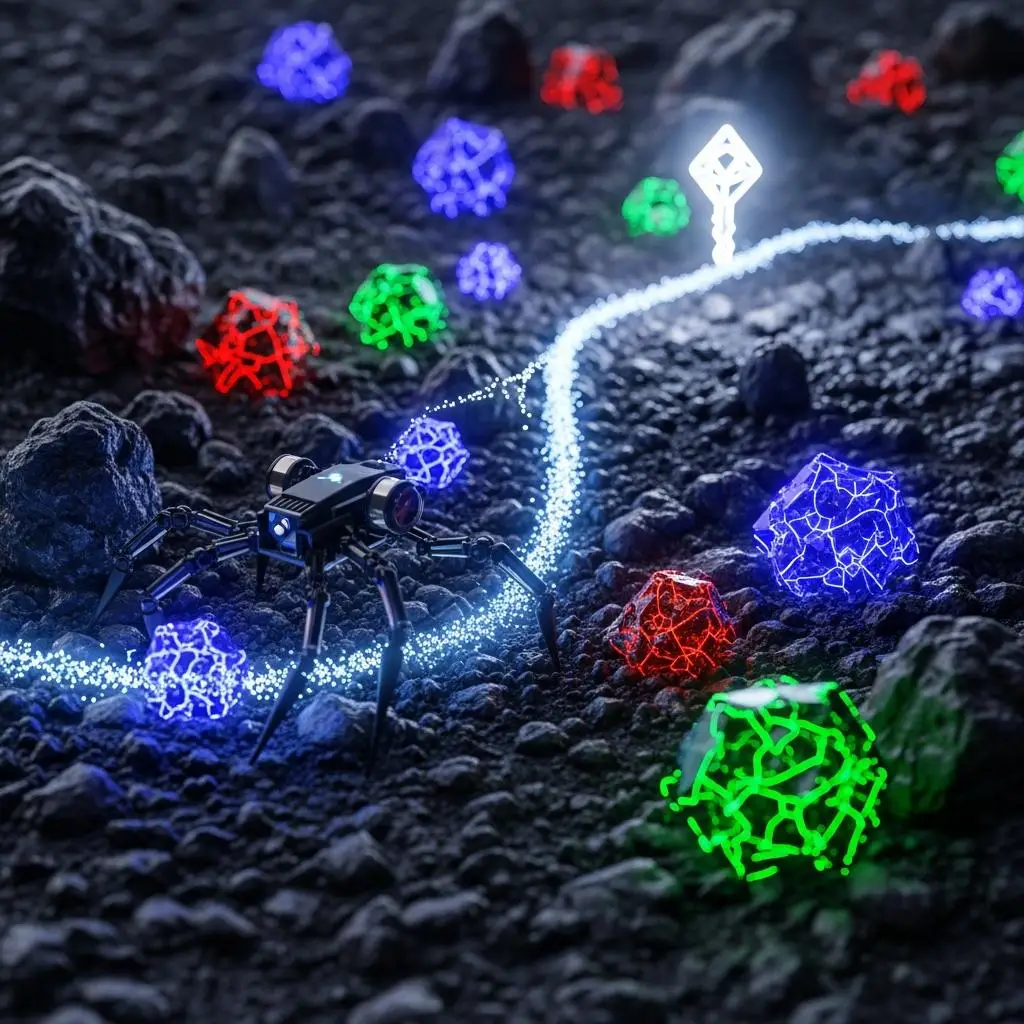

Folks are still squabbling over the “quantum supremacy” tag, which, frankly, feels like debating the aerodynamics of a flying pig. The real issue, the one that keeps security engineers up at night, isn’t some abstract benchmark. It’s the gnawing realization that the race for quantum supremacy is rapidly becoming a race *against* our existing cryptographic foundations.
The Present-Day Race for Quantum Advantage
This isn’t about waiting for the mythical million-qubit, fully fault-tolerant machine to materialize in 2035. That’s slideware. We’re talking about *today*. Today, the challenge isn’t abstract computational power; it’s about extracting *useful* computational advantage from the noisy, imperfect hardware we have. For those of you tinkering with real qubits, you know the score: NISQ-era limitations are the only landscape we’ve got to work with. The question isn’t *if* quantum computers can break crypto, but *when* and *how* – and whether we can get there first, not with theoretical constructs, but with something demonstrable.
Embracing Imperfection: The Art of Harnessing Quantum Noise
Our focus has been on treating these limitations not as bugs, but as features. Noise IS Signal, as we like to say. By meticulously analyzing the Fingerprint of a specific backend, we can begin to understand the noise patterns, not just as something to be averaged out, but as a quantifiable characteristic of the Island we’re operating on. When your calibration reports show certain qubits are consistently… unreliable – let’s call them Poison Qubits – you don’t just discard them blindly.
ECDLPs Pace the Quantum Race
We’ve managed to successfully execute non-trivial ECDLP instances on hardware that, by conventional resource estimates, should be nowhere near capable. We’re talking about recovering keys from 21-qubit ECDLP on an IBM backend – not a toy problem, but a concrete benchmark. We’ve seen 14-bit ECDLP solved at rank 535 out of 1038, precisely because we’ve built our stack *around* the hardware, not *in spite of* it.
Quantum Supremacy Race: Building on Noisy Hardware
So, here’s a supposition for you academic rebels and boundary-pushing programmers: Stop treating decoherence as an error to be wholly suppressed and start treating it as a tunable input for your quantum program. Design your circuits to exploit calibration-aware routing and hardware-optimized circuit design, not abstract theoretical constructs. The race for quantum supremacy is here, and it’s being run on the noisy hardware of today. The question is, are you building the race car, or just admiring the blueprints?
For More Check Out