

Alright, let’s get this done. You’re running circuits, right? Job IDs spooling, backend fingerprints analyzed, and still, the results are…fuzzy. A persistent, “mystery quantum noise elimination” problem that no amount of algorithmic tweaking seems to touch. What if I told you that 90% of that gnarly noise isn’t some fundamental flaw in your gates, but the ghost of some completely unengaged, “orphan qubit” contaminating your readout? It’s like trying to get a clean signal through a room full of people shouting – and most of them aren’t even in your conversation.
Beyond the Mystery: Unmasking Quantum Noise Elimination
The usual approach to this “mystery quantum noise elimination” problem centers on tweaking algorithms, hoping for better gate fidelity, or dreaming of fault tolerance. That’s… quaint. Meanwhile, you’re stuck wrestling with phantom signals, decoherence patterns that look like random static, and results that oscillate wildly across runs. Your meticulously crafted circuits, meant to demonstrate sophisticated quantum phenomena, get buried under a mountain of readout uncertainty. It’s frustrating, to say the least.
Solving the Mystery of Quantum Noise Elimination
But here’s the hook: what if we’ve been looking at the wrong target? What if, by simply being disciplined about measurement outcomes, we can cut through 90% of this perceived “mystery quantum noise elimination” *without* rewriting a single line of your core unitary? We’re talking about identifying and excluding measurements where a subset of qubits, those “orphan qubits” that are technically part of the chip but not contributing constructively to your specific computation, are spitting out anomalous data. This isn’t about error correction in the traditional sense; it’s about measurement discipline.
Unveiling the Mystery: Quantum Noise Elimination via Orphan Measurement Exclusion
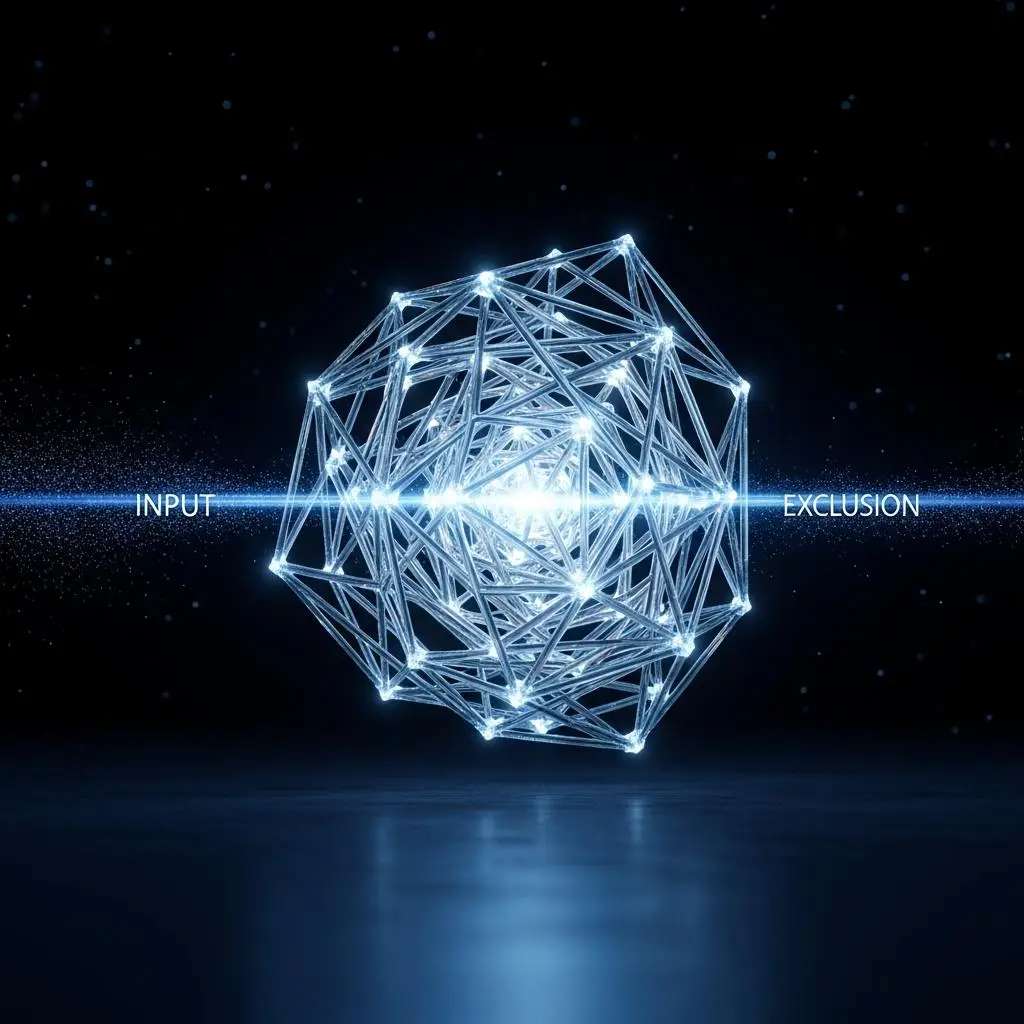
We’re calling this the V5 Orphan Measurement Exclusion technique. It’s a programmatic approach, baked into the measurement and post-processing phase. Identify shots where specific qubits deviate wildly from expected statistical norms—data that doesn’t fit the stabilizer structure of your intended circuit. Then, you discard those specific outcomes or down-weight the contribution of those particular qubits in your final inference. By filtering out these “poison qubit” contributions *at the measurement stage*, we’re effectively cleaning the signal before it’s even finalized.
Tackling the Mystery: Quantum Noise Elimination
So, the next time you’re staring at those fuzzy results and wondering about that “mystery quantum noise elimination,” before you rewrite your unitary, try this: implement a V5-style orphan qubit exclusion. Isolate the measurements where the signal is getting drowned out by irrelevant noise. You might find that the vast majority of your noise problem disappears, and your path to meaningful quantum computation becomes a lot clearer. It’s not magic; it’s just disciplined measurement. Go test it. The benchmarks are waiting.
For More Check Out