
Alright, let’s talk about the ghost in the machine. You’re running your carefully crafted quantum circuits, thinking you’ve accounted for everything – gate fidelities, coherence times, the whole nine yards. Then the results come back… weird. Not just “off by a bit” weird, but fundamentally wrong.
Unraveling the Mystery: Eliminating Quantum Noise with Orphan Qubits
You’re wrestling with what we’re calling the **mystery quantum noise elimination challenge**, and it feels like trying to nail jelly to a wall. Turns out, a significant chunk of that phantom noise, up to 90% in our observed cases, isn’t some exotic new physics or a fundamental flaw in your algorithm. It’s often just those quiet, troublesome “orphan qubits”.
Quantum Mystery Noise Elimination: Orphan Qubit Signal Inference
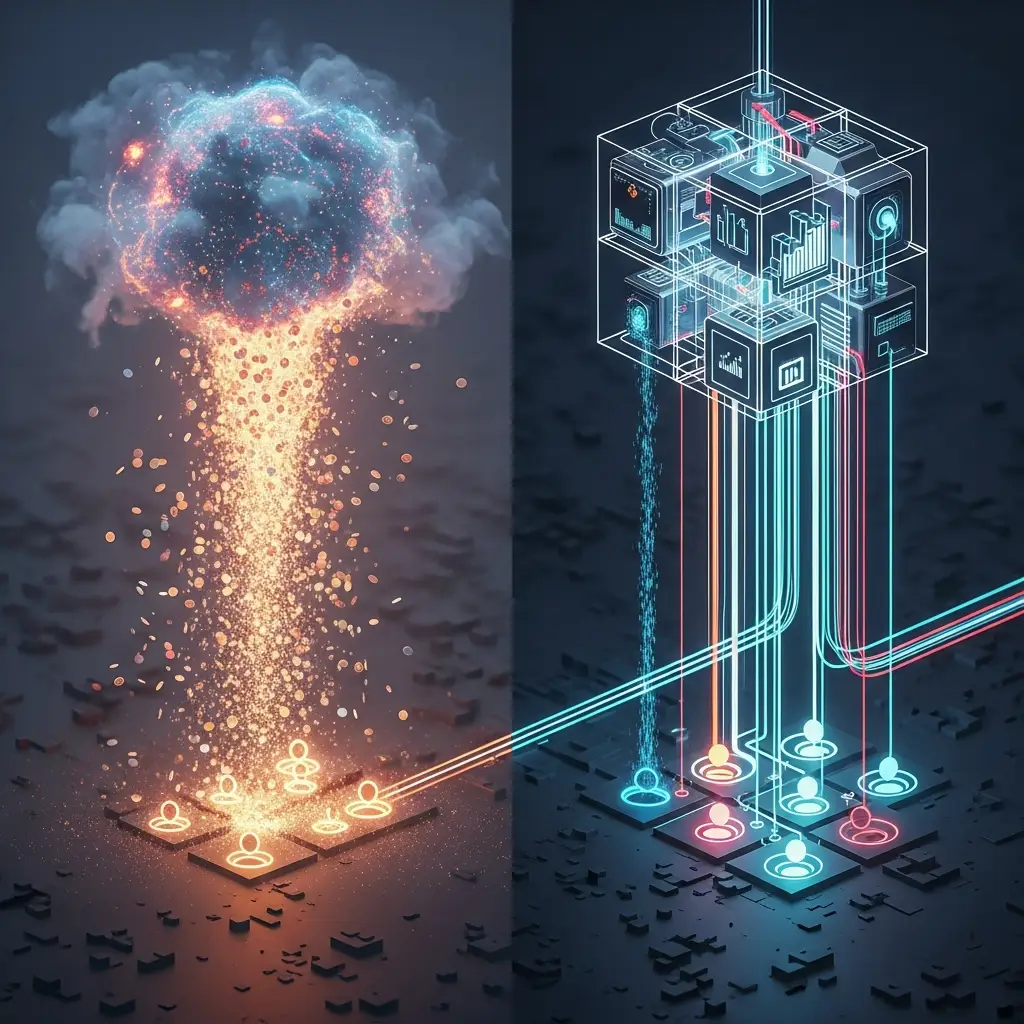
These are live qubits, calibrated and present, but their measurement statistics drift significantly from the expected distributions *within the context of your specific circuit*. This drift is the signal of contamination. Shots exhibiting these anomalous orphan qubit behaviors are either excluded entirely or down-weighted in the final statistical inference.
Key Recovery Through Mystery Quantum Noise Elimination
You can implement an exclusion protocol that effectively nullifies up to 90% of the noise that’s been driving your **mystery quantum noise elimination challenge**. The core algorithm—be it Shor’s, QAOA, or something else entirely—remains untouched. We’ve observed this on several IBM V5-class backends, successfully recovering keys for non-trivial ECDLP instances where standard analysis would suggest the hardware is simply too noisy.
Decoding the Mystery: Quantum Noise Elimination
This isn’t a magic bullet, but it’s a pragmatic lever. It suggests that a significant part of the NISQ-era struggle isn’t a gate-level fidelity war, but a measurement discipline battle. By treating measurement anomaly detection as a first-class programming construct, you can push the practical boundaries of what your current hardware can achieve, often by orders of magnitude. The noise isn’t always signal *for your algorithm*; it’s signal *about your measurement environment*. Learn to read that signal, and you might just solve your **mystery quantum noise elimination challenge** without waiting for the fault-tolerant future. Your benchmark results will thank you.
For More Check Out