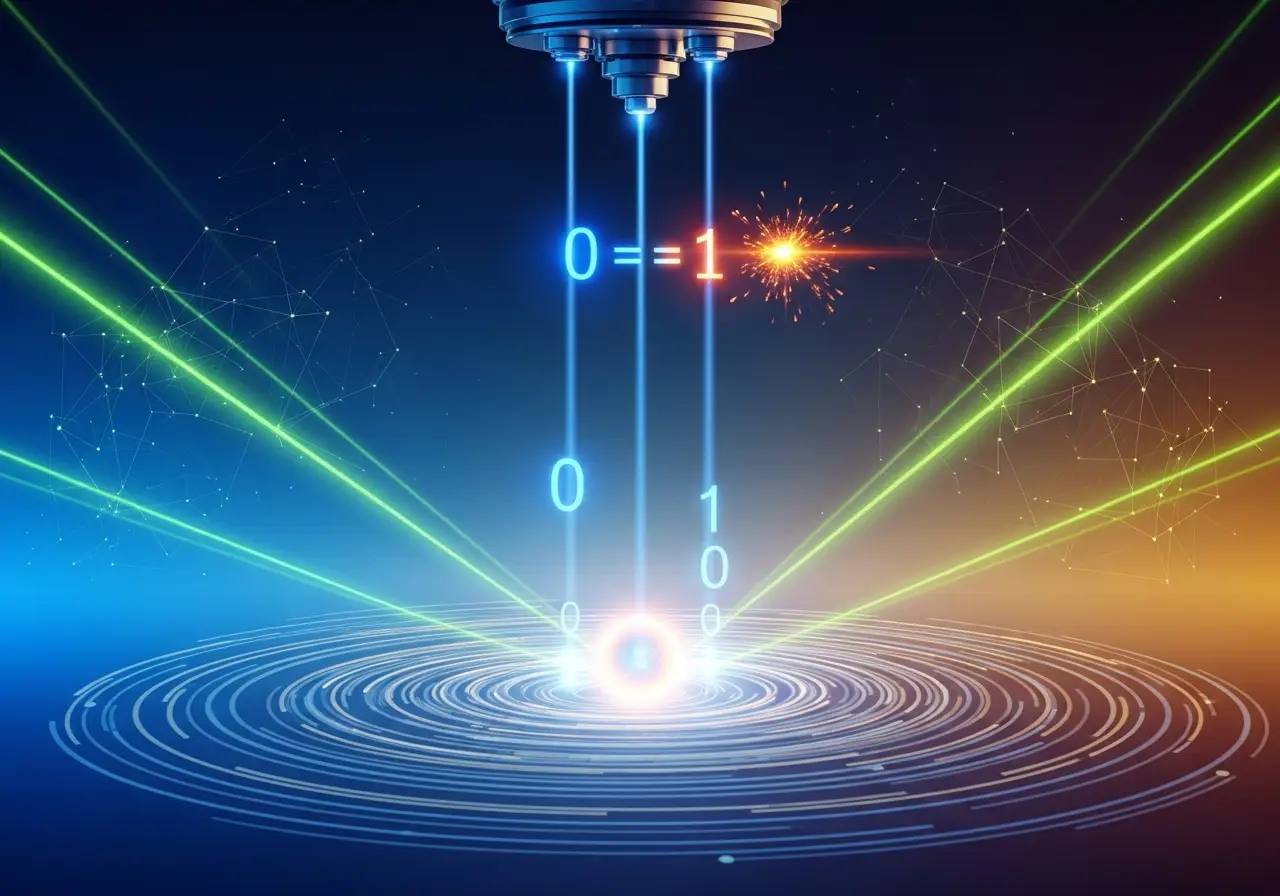


Alright, let’s cut through the noise. Textbooks wax poetic about superposition, the grand cosmic dance of “infinite possibilities.” But if you’re like me, wrestling with a real quantum backend, you know the reality is a lot messier. You spin up a job, hoping for that elegant superposition principle circuits execution, and what do you get? A log file that screams “orphan qubits” at you.
Superposition Principle Circuits and the Specter of Rogue Qubits
This whole “orphan qubit” problem isn’t some niche hardware quirk; it’s a fundamental obstacle when you’re trying to leverage superposition principle circuits in any meaningful way on today’s NISQ hardware. Think about it: you send a clean quantum state through a series of gates, expecting a beautifully entangled output. But if even a small fraction of your qubits decide to go rogue during mid-circuit measurement, or worse, get entangled with stray noise before the final readout, your entire shot is compromised.
Excluding Specter Qubits: A V5 Orphan Measurement Strategy
So, how do we fight this? My team at Firebringer has been banging our heads against this for a while, and the answer isn’t more qubits or fancier gates. It’s about discipline. Specifically, it’s about treating measurement not as an endpoint, but as a critical, intermediate step that must be scrutinized. We call it the V5 orphan measurement exclusion strategy. Here’s the gist: Instead of just blindly accepting every shot, we’re actively looking for the “orphans.”
Harnessing Superposition: Beyond Rogue Qubits with V5 Orphan Measurements
By filtering these out, we’re not just cleaning data; we’re revealing the underlying quantum behavior that was there all along. This V5 approach is a practical, no-BS way to push the boundaries of what’s possible now. We’re not waiting for the million-qubit dream machine. We’re taking the machines we have, understanding their limitations, and engineering around them with Hardware-Optimized Techniques (the H.O.T. Framework, if you’re keeping score).
Exploring Superposition Principle Circuits Under Noise and V5 Exclusion
Try this: implement a basic two-qubit superposition circuit. Now, deliberately introduce some correlated noise or semi-collapsed states to a subset of qubits mid-circuit. See how quickly your signal drowns. Now, apply a V5-style exclusion logic. You’ll see that signal re-emerge. The takeaway? The textbooks are good for inspiration, but the real work is in the dirt. It’s in understanding the fingerprint of your backend, identifying orphan qubits, and architecting your circuits to tolerate, detect, and exclude their contamination. This is how we make progress on NISQ today, and it’s how we’ll build the useful quantum applications of tomorrow.
For More Check Out