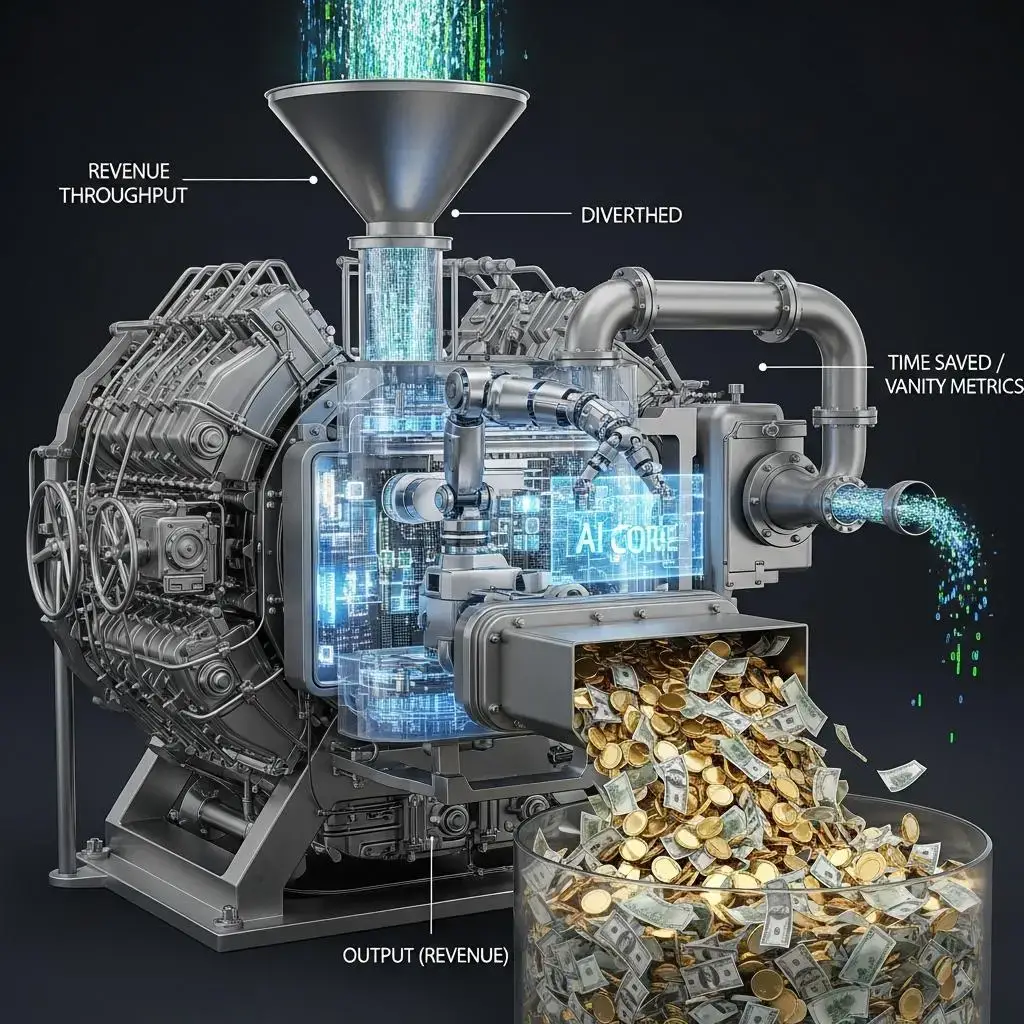

You’ve seen the headlines, the demos, the slick interfaces promising an AI revolution for your business. But have you ever felt that gnawing suspicion that these “agents” are just fancy chatbots playing dress-up, destined to break the moment you ask them to do anything truly complex? The truth is, most of what’s being peddled today is brittle automation – a patchwork of commands that crumbles under pressure.
Architecting Autonomous AI Agents for Business Automation
If you’re serious about how to build autonomous AI agents for business automation that actually *work* in the real world, you need to stop thinking about single tools and start architecting systems. You need to understand how multiple AI agents can coordinate, delegate, and execute intricate operations, creating a synchronized force that delivers predictable, scalable results – not just a single, easily overwhelmed digital employee.
Orchestrating Autonomous AI Agents for Business Automation
Forget the idea of a lone AI wolf trying to herd your entire business into the 21st century. That’s a recipe for “system drift,” where your carefully crafted instructions get mangled into nonsense because one digital brain is trying to do it all. Instead, imagine a symphony orchestra. Each instrument, like each AI agent, has a specific role. The violins aren’t trying to lay down the bassline, and the drummer isn’t trying to hit the high notes.
Designing Autonomous AI Agents for Business Automation
Consider the concept of “recursive geometric circuitry for error mitigation” we’ve been exploring in the quantum computing space. While we’re not actually building quantum computers (yet!), the underlying principle is profoundly applicable. Just as embedding computation within self-similar patterns of operations can cancel out noise and errors in quantum circuits, we can design our AI agents and their communication protocols to be robust against minor glitches and “system drift.”
Implementing Autonomous AI Agents for Business Automation
This structured approach drastically reduces the chances of “brittle automation.” Unlike a single agent trying to remember every step of a complex process, our multi-agent system is resilient. If one agent encounters an unexpected input (a slightly malformed email address, for example), the system can be designed to isolate that issue. The “Intake Agent” might flag the bad data for manual review, rather than letting the entire workflow collapse. This is the difference between a single, easily tripped wire and a robust electrical grid where a localized fault doesn’t shut down the entire city.
For More Check Out