
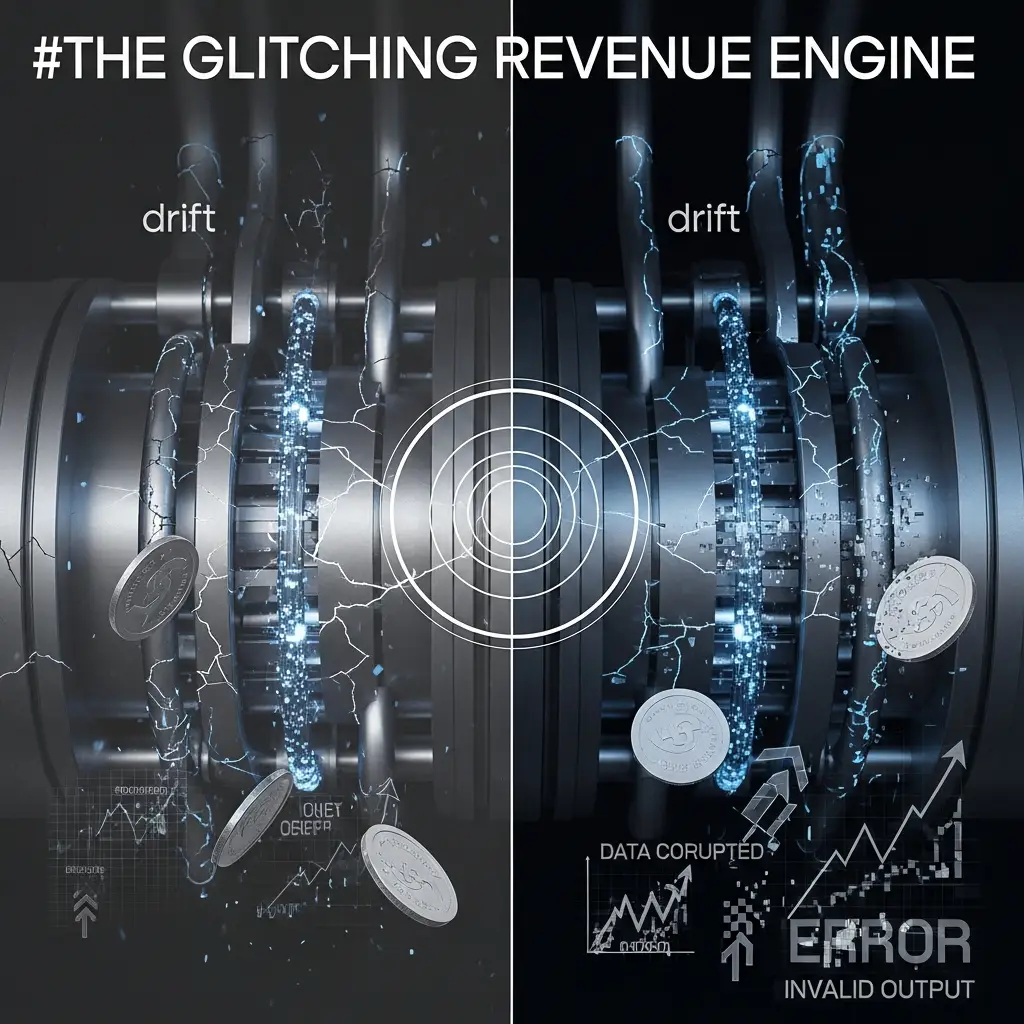

You’ve spent weeks, maybe months, integrating GPT-4o into your core processes, meticulously crafting your workflows, only to have it spit out… nonsense. This isn’t “hallucination”; this is System Drift in action, and ignoring it is akin to leaving the factory floor unsupervised. The real question isn’t *if* your AI will start deviating, but *when* and *how* you’ll detect it before it cripples your revenue throughput.
Detecting Hallucinations and Model Drift in GPT-4o Deployments
For the solo founder or the freelance operative, this isn’t just an academic annoyance; it’s a direct threat to your livelihood. When your AI assistant starts to wander off the rails, it’s not just an inconvenience – it’s a profit leak. The seductive ease of generative AI quickly sours when the output becomes unpredictable. We need to shift from admiring the shiny new interface to understanding the underlying structural integrity, or lack thereof, in our deployed AI systems.
Understanding GPT-4o Model Drift: Beyond “Hallucinations”
Let’s cut through the marketing fluff. The term “hallucination” is largely unhelpful when discussing deployed AI in a business context. What’s actually happening is a gradual erosion of the model’s ability to adhere to its intended function, a phenomenon we term System Drift. This isn’t about the AI suddenly developing sentience; it’s about the interplay of training data, shifts in usage patterns, and the probabilistic nature of these models leading to a slow decay in output quality. Detecting this drift requires a proactive, architectural approach.
Proactive GPT-4o Drift Detection: Strategies for Hallucination Prevention
Detecting this drift requires a proactive, architectural approach. Implement “Edge-Case Escalation” benchmarks and “Revenue Throughput” correlation. Establish a small, dedicated “monitoring prompt suite” that runs weekly. Adopt a “measurement discipline” by monitoring the statistical distribution of certain key metrics within your AI’s output. Implement “Brittle Automation” countermeasures. The objective is to establish predictable boundaries and create systems that detect when the AI ventures outside those boundaries in a way that harms your business objectives.
Identifying GPT-4o Hallucinations Through System Drift Monitoring
Think of it this way: you wouldn’t rely on a self-driving car without a dashboard showing its speed, fuel level, and system alerts. Your AI deployments, especially those tied to revenue, deserve the same level of vigilance. By implementing a system for detecting System Drift and focusing on Revenue Throughput as your primary indicator, you move from being a passive user of AI to an active architect of reliable, AI-powered business processes. This proactive stance is what separates hobbyists playing with interfaces from founders building actual, robust revenue engines.
For More Check Out