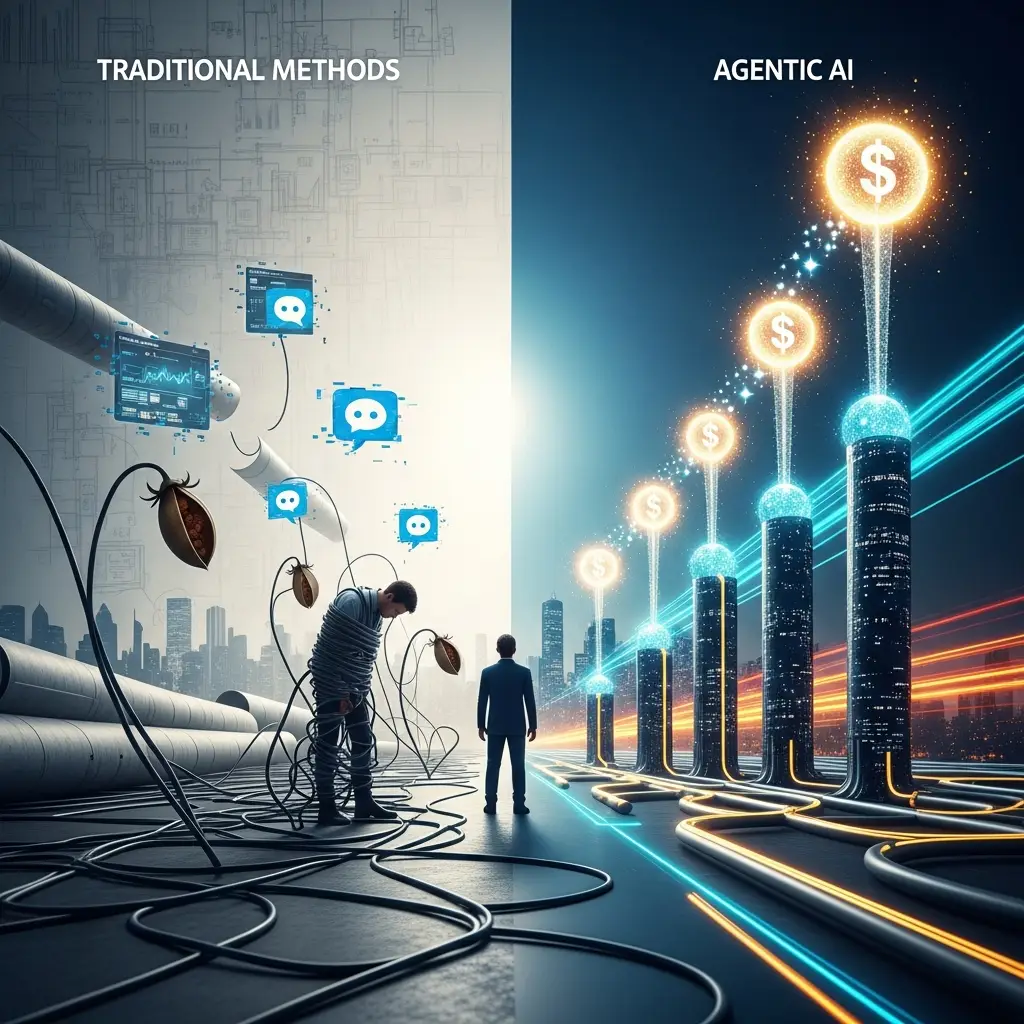


You’ve built a slick AI interface, humming with potential. But the moment you try to scale it, to give each customer a truly unique experience without drowning in token waste, the whole thing starts to choke. That’s the brutal reality of scaling AI productivity for hyper-personalization without token bloat – it’s not about fancy prompts, it’s about fundamentally re-engineering the engine under the hood. We’re talking about moving beyond the chatbot carnival and into the realm of industrial-grade AI systems that actually *produce* revenue, not just chew through API calls.
The Token Bottleneck: Scaling Hyper-Personalization
The core issue isn’t that AI *can’t* personalize. It’s that the standard approach treats AI like a supremely talented, but utterly untrained intern. You give it a general task, and it tries its best, but often it just regurgitates generic advice or, worse, invents things that sound plausible but are utterly wrong – we call this “system drift.” For hyper-personalization, this means feeding it more and more specific context for each individual customer, which translates directly into an explosion of token usage. Think of it like trying to teach a single actor every single line for every single role in a thousand-person play, simultaneously.
Modular AI for Efficient Hyper-Personalization
Instead of treating your AI like a generalist, we architect it like a specialized factory floor. This means breaking down complex personalization tasks into discrete, highly optimized subprocesses. For example, imagine you offer personalized coaching. Instead of one giant prompt asking the AI to “create a unique fitness plan for Jane Doe, who loves hiking, has knee issues, and wants to run a marathon,” you build a modular system. One module might analyze Jane’s existing fitness data for historical patterns, another might cross-reference her stated preferences with biomechanical constraints, and a third might generate specific exercise descriptions based on a pre-defined library of movements and modifications.
Industrial AI: Scaling Hyper-Personalization Beyond Chatbots
By shifting your focus from conversational interfaces to industrial-grade systems, you can unlock true scalability for hyper-personalization. This means moving beyond the novelty of chatbot interactions and building revenue-generating engines. The core principle is to treat AI as a programmable infrastructure, not a talking heads. This requires a disciplined approach to design, focusing on modularity, efficient data processing, and intelligent output validation. The result? You can deliver deeply personalized experiences to every client without the crippling cost of token bloat, freeing up your time and significantly boosting your productivity.
Deconstructing for Scalable Hyper-Personalization
To implement this, start by dissecting your current personalization process. Where are you spending the most manual effort? Where does the AI currently struggle or produce generic results? Map these out. Then, break down those complex tasks into the smallest possible, discrete units of work. Next, investigate using smaller, specialized AI models or even pre-computed responses for certain tasks, rather than always relying on a large, general-purpose model. Finally, consider your “edge-case escalation” strategy. Define clear rules for when and how the system should hand off to you, the human expert.
For More Check Out