

Alright, let’s get this done. Justin here, orange beard and all. They’re telling you we need millions of fault-tolerant qubits to do anything useful in quantum. Makes sense, right? If the qubits are that fragile, you need a massive overhead for error correction.
NISQ Hardware: The Measurement Hygiene Advantage
But what if the real bottleneck isn’t just raw qubit count, but the *quality* of the information we’re pulling off the machine? On today’s NISQ hardware, worrying about massive error correction codes is often a distraction. We’ve found that focusing on meticulous **measurement hygiene** — understanding and mitigating the noise *at the readout stage* — can deliver results that brute-force correction schemes, even on larger theoretical systems, simply can’t touch.
Measurement Hygiene on Non-NISQ Hardware: Beyond the Textbook
This isn’t about waiting for 2035 slideware. This is about the here and now, the $T_1/T_2$ values etched into today’s metal, the actual output from circuits that *shouldn’t* be working according to the textbooks. We’re talking about cracking ECDLP instances with more bits than most academic groups dare to benchmark, on hardware that’s notoriously prone to decoherence and crosstalk. The prevailing narrative screams for fault tolerance, for logical qubits built from dozens of physical ones.
NISQ Hardware: The Measurement Hygiene Advantage
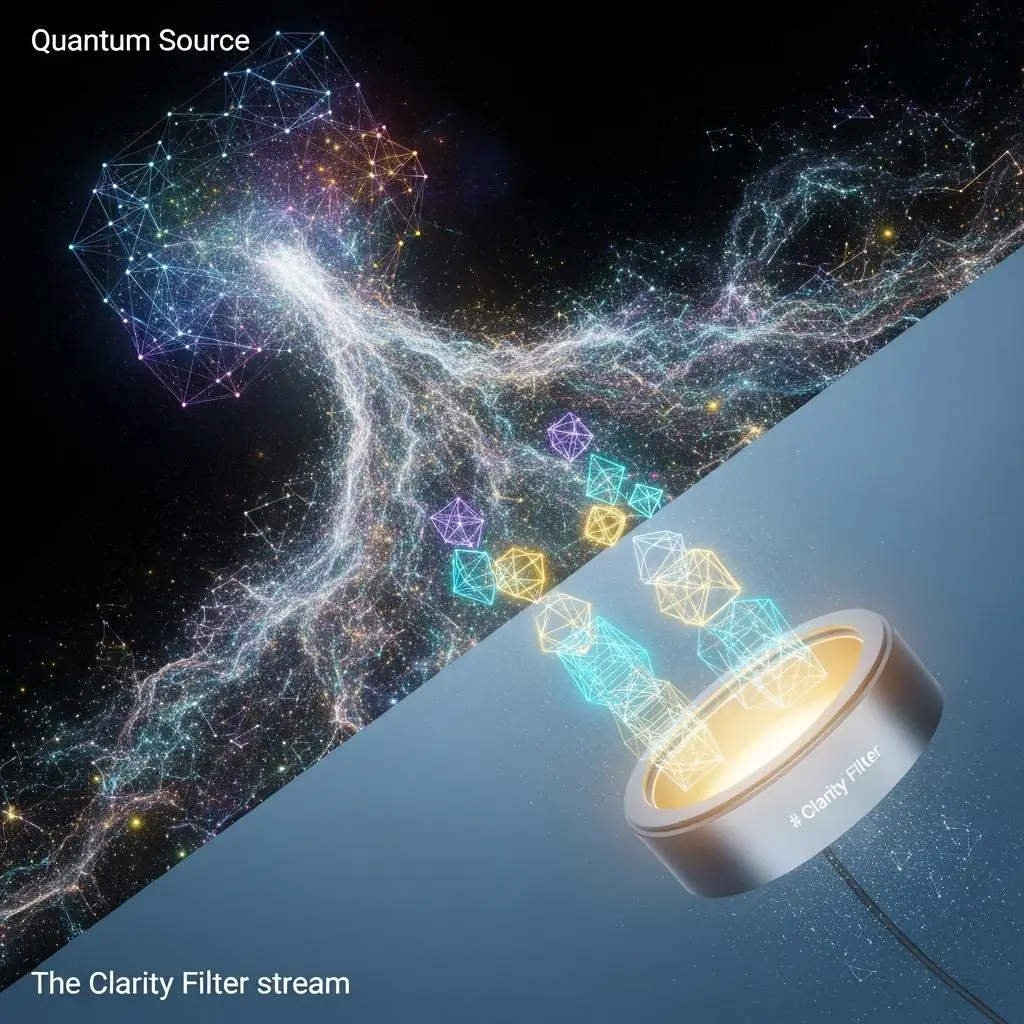
By treating measurement outcomes not as gospel, but as a highly variable signal source needing careful discrimination, we can effectively extend the utility of NISQ hardware far beyond its perceived limits. We are building a smarter filter *at the output* and developing a rigorous discipline around how we interpret the final qubit states.
Measurement Hygiene on NISQ Hardware: Unlocking Performance
The question for you, the quantum programmer looking to move beyond toy problems, is: are you still treating measurement as a passive output, or are you actively shaping your program to benefit from its idiosyncrasies? If you’re hitting a wall with current benchmarks, if your Shor’s algorithm implementations are falling apart on systems that theoretically *should* handle them, it’s time to look critically at your measurement strategy. Don’t just run more shots; run smarter shots. Invest in **measurement hygiene** on your NISQ hardware, and you might be surprised at what you can recover. This isn’t about theoretical constructs; it’s about practical, demonstrable results on the hardware you have access to *today*. The benchmarks are waiting.
For More Check Out