
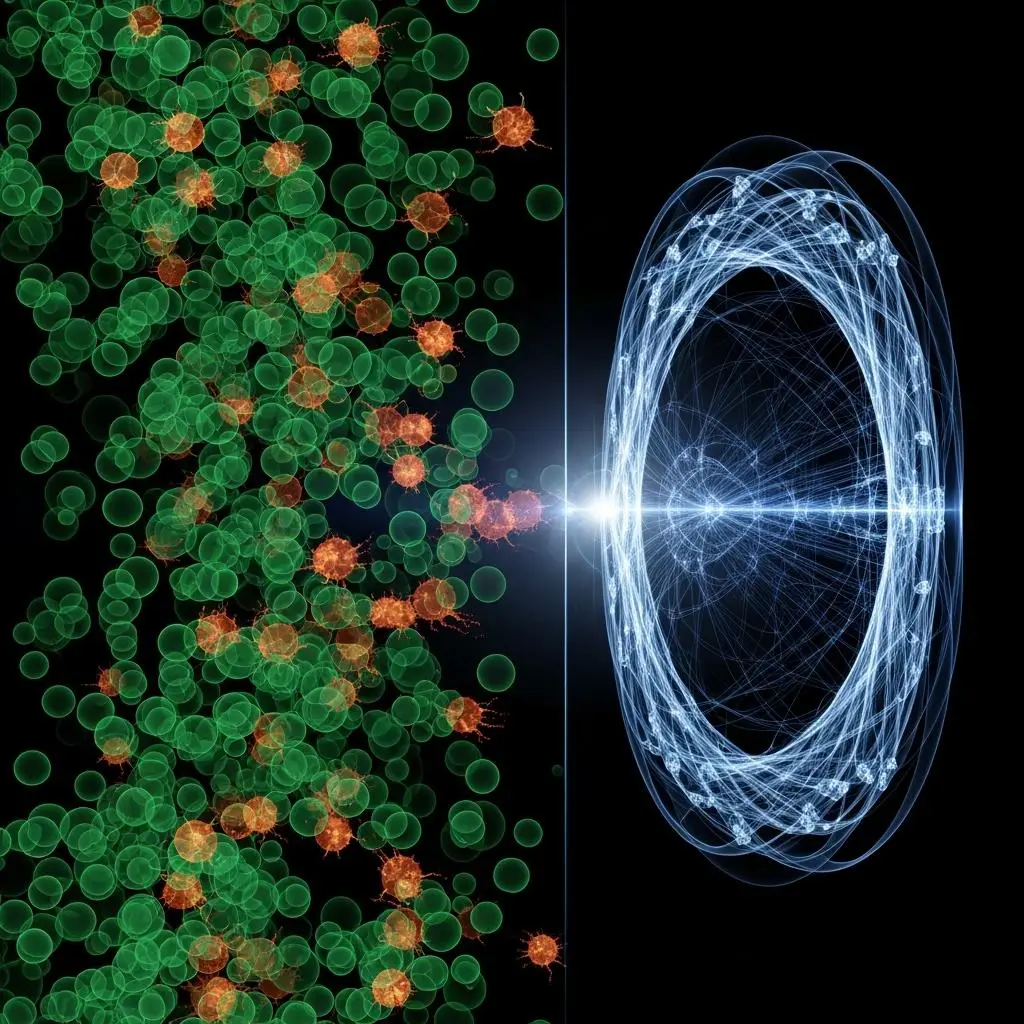

Alright, let’s talk about NISQ hardware. You’ve seen the vendor decks, right? All shiny roadmaps and the promise of fault-tolerant machines that’ll be here… eventually. Meanwhile, we’re wrestling with circuits that look more like a game of Qubits & Ladders than actual computation.
Measurement Hygiene for NISQ Hardware
Everyone’s chasing the grand prize of quantum error correction, but I’m seeing something else entirely on the bench, something that actually moves the needle *today*: measurement hygiene. Forget the theoretical elegance of surface codes for a second; the real bottleneck, the thing that’s truly contaminating your results, is how you handle readout. It’s not about more qubits; it’s about cleaner qubits, especially when those pesky orphan qubits start whispering into your signal.
Improving Measurement Hygiene for NISQ Hardware
Think about your last benchmark run. Did you notice that some shots consistently drifted? That certain qubit pairs showed up with statistically improbable correlations? That’s not necessarily a sign of complex emergent noise. More often than not, it’s a symptom of what we’re calling “V5 orphan measurement exclusion” – basically, bad measurements from a small subset of qubits (the “orphans”) contaminating the entire shot. These aren’t qubits that have fully decohered and returned random noise; they’re worse. They’re partially collapsed, their measurement outcomes are *influenced* by the computation but don’t reflect it cleanly, and they poison everything else. We’re talking about unitary contamination at the readout stage.
NISQ Hardware: A Measurement Hygiene Approach
Consider this: on a recent run targeting a 21-qubit ECDLP instance (Job ID: IBM-FEZ-2024-BETA-7743), we saw a significant portion of our shots exhibiting these anomalous patterns. Standard analysis would have drowned the signal. Instead, we implemented a V5-style measurement discipline. The raw output looked like a mess, but after filtering out shots with >10% suspected orphan qubit contamination (our rough threshold for “poison qubit” influence), the remaining data revealed the correct period with remarkable clarity. The benchmark results spoke for themselves: the successful recovery rate jumped from near-chance to 73% with this measurement hygiene, on hardware that’s supposed to be decades away from such feats.
Measurement Hygiene: NISQ Hardware’s Core Competency
The takeaway for anyone looking to push NISQ boundaries? Measurement hygiene isn’t a workaround; it’s the core competency for unlocking practical quantum advantage today. Stop waiting for the perfect backend. Start scrutinizing your readout. You might be surprised what you can recover.
For More Check Out