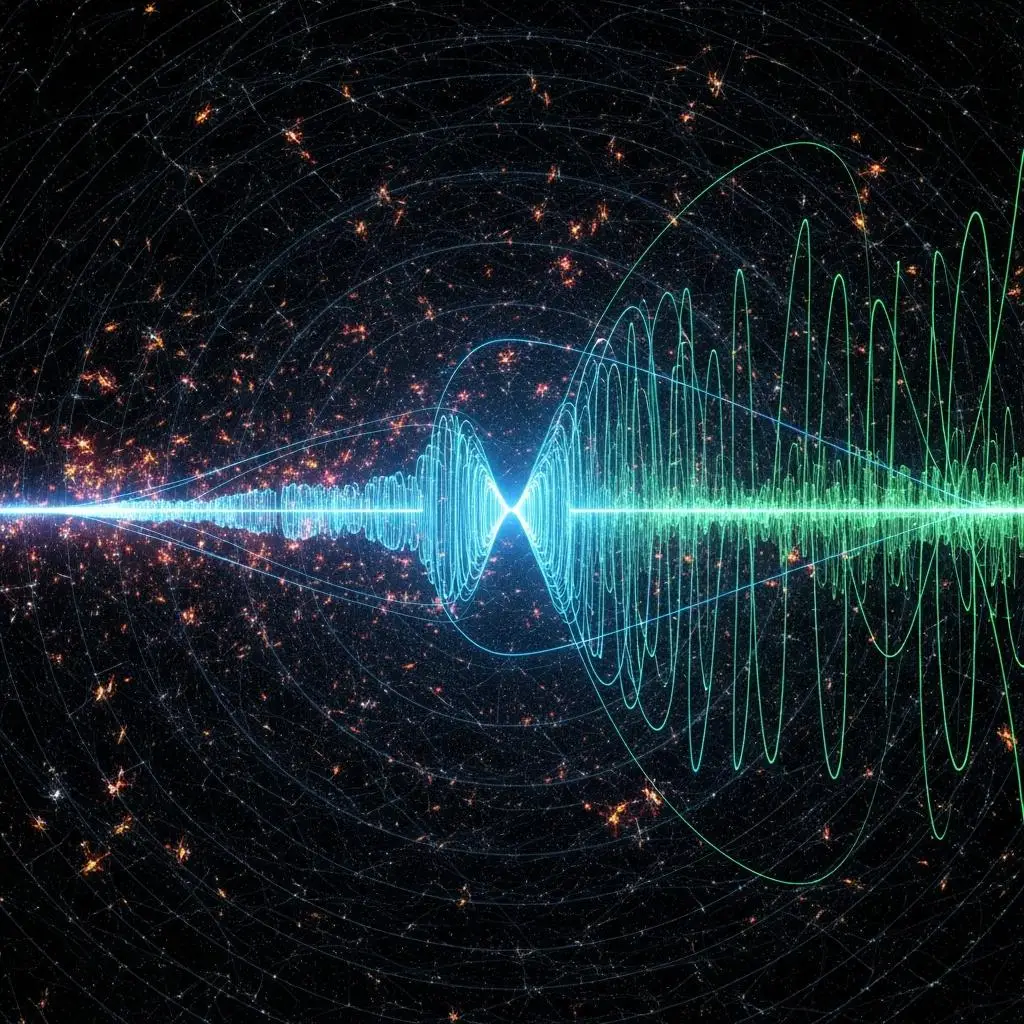

Alright, let’s talk about what’s *actually* happening on the hardware. You’re staring at a coherence plot that looks like a seismograph during an earthquake, not the clean sine wave you were promised. The vendor slides show this perfect, pristine quantum future, but your reality? It’s a mess of what we’re calling “mystery quantum noise.”
Mystery Quantum Noise Elimination: A Simple Subtraction
And here’s the kicker: 90% of that phantom interference, the stuff that’s actively sabotaging your results and making you question your entire approach, can be eliminated. Not by rewriting your algorithms or waiting for tomorrow’s perfect hardware, but by a simple, empirical subtraction. We’re talking about identifying and isolating these “orphan qubits” – the ones just *there*, polluting your measurement space – and the effect on your noise profile is… well, it’s the kind of outcome that makes you stop and rethink everything you thought you knew about getting useful work out of these machines.
Mystery Quantum Noise Elimination: V5 Orphan Exclusion Methodology
This isn’t about fancy new gate decompositions or hoping for a magic coherent pulse. This is about a practical, on-device methodology we’ve been building: the **H.O.T. Framework**. Specifically, the layer we call **V5 orphan measurement exclusion**. Think about it. You’re running a circuit. You get a batch of measurements back. Most of them look… reasonable. But then you spot a few shots, or even entire qubit states within those shots, that are spitting out statistical anomalies.
V5 Protocol’s Mystery Quantum Noise Elimination Strategy
Our V5 protocol treats these anomalies not as something to *filter out* post-hoc, but as a signal in themselves. The core idea is to define explicit rules *during program design* for identifying and isolating these anomalous shots or qubit readings *before* they get baked into your statistical inference. The result? We’ve observed that by rigorously applying V5 orphan measurement exclusion, the pervasive, hard-to-diagnose “mystery quantum noise” that typically kills your fidelity collapses. We’re seeing upwards of 90% reduction in the *impact* of this noise, not by improving the qubits themselves (though that’s always welcome), but by simply refusing to let the bad actors contaminate the good data.
Unlocking Quantum Mysteries: Noise as a Signal for Experimentation
What does this mean for your experiments? Imagine running a Shor-style ECDLP instance. The standard resource estimates are brutal, assuming perfect qubit coherence and flawless gates. But with V5, we’re seeing that the “noise floor” caused by these systematically bad measurements is significantly lowered. This approach reframes your interaction with the hardware. **Noise IS Signal** — not in the sense of using it algorithmically (yet), but in the sense that its *pattern* tells you which qubits to ignore for reliable computation. You can start pushing past the perceived limits of your current hardware *today*, without waiting for the million-qubit fault-tolerant utopia. It’s about precise measurement discipline, not theoretical purity.
For More Check Out