
You’ve seen the glossy infographics, the shimmering nebulae of potential, the promise of computing power that dwarfs anything humanity has ever conceived. But buried beneath the hype, in the stark reality of today’s hardware, lies a silent killer of quantum computation: Unitary Contamination. For anyone trying to push the boundaries of deep NISQ circuits, this isn’t a theoretical problem; it’s the ghost in the circuit, a fundamental barrier that renders even elegant algorithms useless.
Quantum Error Correction & Fault Tolerance: The Practitioner’s Edge
This is where Firebringer Quantum steps in. We’re not here to paint pretty pictures of future quantum computers that are decades away. We’re building the quantum present, a tangible reality where the “underground” manual for Hardware Optimized Techniques (H.O.T.) allows practitioners to bypass vendor bottlenecks and actually *use* the hardware available. Our UVP is simple: the Practitioner’s Foresight, bridging the chasm between quantum hype and hardware reality.
Leveraging NISQ Constraints: Beyond Quantum Error Correction and Fault Tolerance
The core issue, Unitary Contamination, arises from the inherent limitations of Noisy Intermediate-Scale Quantum (NISQ) devices. Our approach is not to dream of fault-tolerant architectures that are still on the distant horizon. Instead, we’ve developed what we call H.O.T. Architecture: a proprietary gate-level topology that actively *embraces* the constraints of current hardware. The goal is to extract genuine utility from these devices, today, by being smarter about how we program them.
Addressing Orphaned Data for Quantum Fault Tolerance
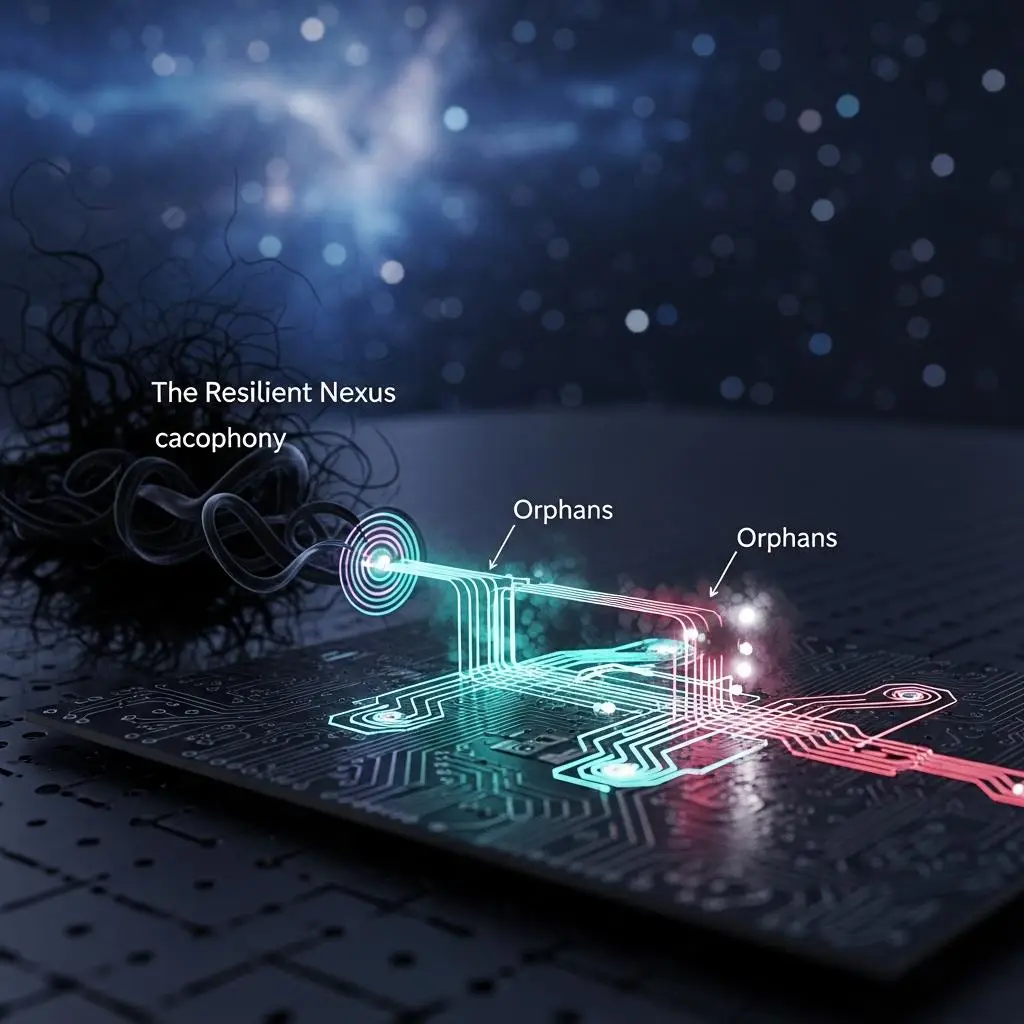
One of the most critical components of our strategy is what we term “orphan measurement exclusion.” In systems like V5, we’ve observed anomalous readout events – what we’re calling “orphans” – that significantly contaminate multi-qubit interference patterns. This carefully engineered stack culminates in the demonstration of nontrivial instances of the Elliptic Curve Discrete Logarithm Problem (ECDLP). Our H.O.T. Architecture, by integrating orphan exclusion and recursive geometric error mitigation, can successfully resolve ECDLP instances on current devices that would appear “beyond reach” under those default assumptions.
Pragmatic Quantum Programming: Navigating the Edge of Fault Tolerance
This demonstrates a potent reality: careful, pragmatic quantum programming—focusing on geometry, recursion, and intelligent measurement logic—can extend the practical boundary of what today’s hardware can achieve, without the long wait for a theoretical fault-tolerant future.
For More Check Out