
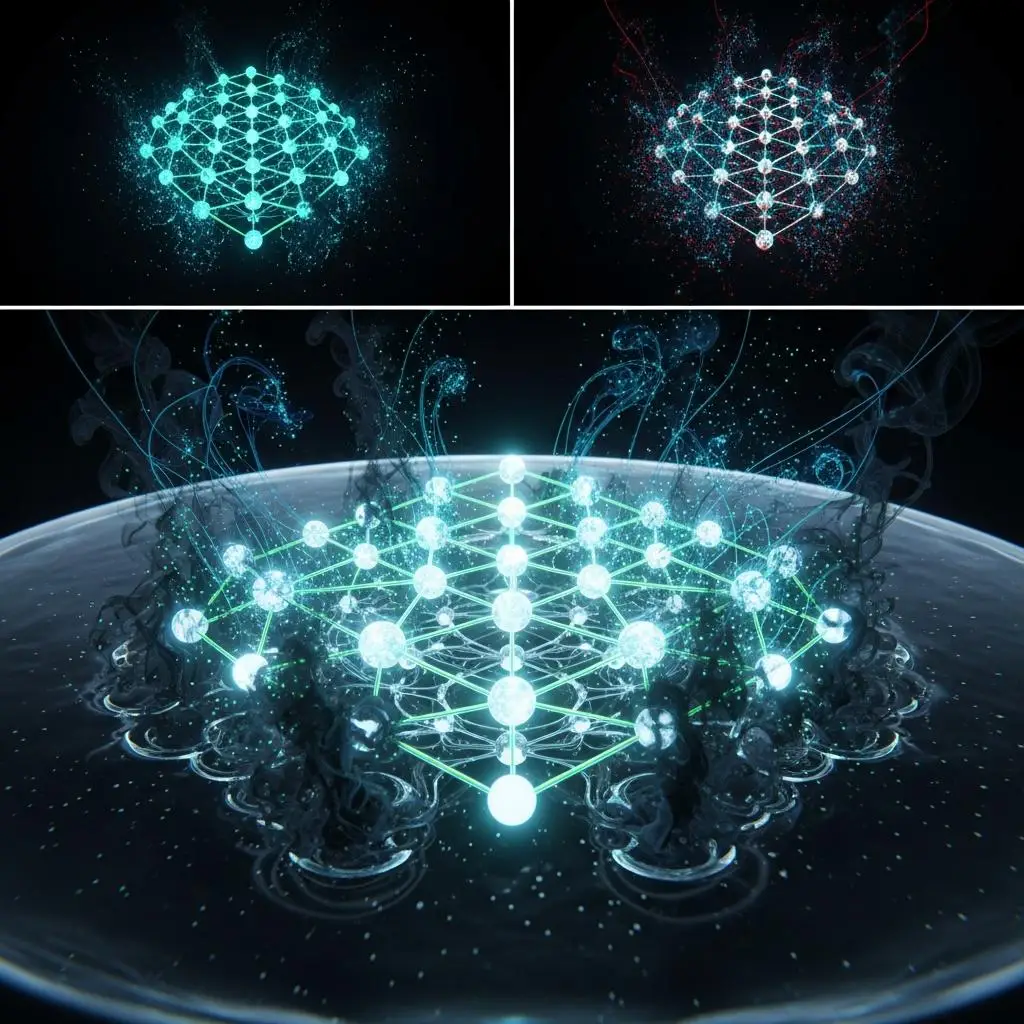

You’ve spent weeks on a deep NISQ circuit, painstakingly calibrating each qubit. You push it to the backend and the results are gibberish. The usual suspects have been accounted for, but what if the real killer is unitary contamination? This bypasses standard error mitigation and leaves your results unreadable.
Unitary Contamination in Deep NISQ Circuits
Standard calibration overlooks a specific failure mode. Even with good $T_1$ and $T_2$ values, your ECDLP or QFT implementation can fail. The issue isn’t always active qubits; surrounding qubits can bleed their decay states into your active computation during readout, which is unitary contamination. Consider the raw output of Job ID `XYZ789-Alpha` on a 32-qubit backend.
Mitigating Unitary Contamination in Deep NISQ Circuits
The success of deep NISQ circuits hinges less on chasing theoretical fault tolerance and more on identifying and isolating the sources of unitary contamination. This requires a shift in how we approach calibration and measurement. Even “idle” qubits can poison the signal.
Scanning for Unitary Contamination in Deep NISQ Circuits
You can develop a “Contamination Scan,” measure “Presence vs. Dominance,” and benchmark ECDLP with contamination awareness. This involves probing multi-qubit readouts, detecting anomalous cross-correlations, differentiating qubit contributions, and tailoring the circuit layout to isolate or exclude shots exhibiting signs of unitary contamination.
Visualizing Unitary Contamination Depth in NISQ Circuit Recovery
The raw output logs from Job ID `XYZ789-Alpha` are just the starting point. The real benchmark isn’t just recovering the key, but recovering it with demonstrably low unitary contamination. Let’s make this visible.
For More Check Out