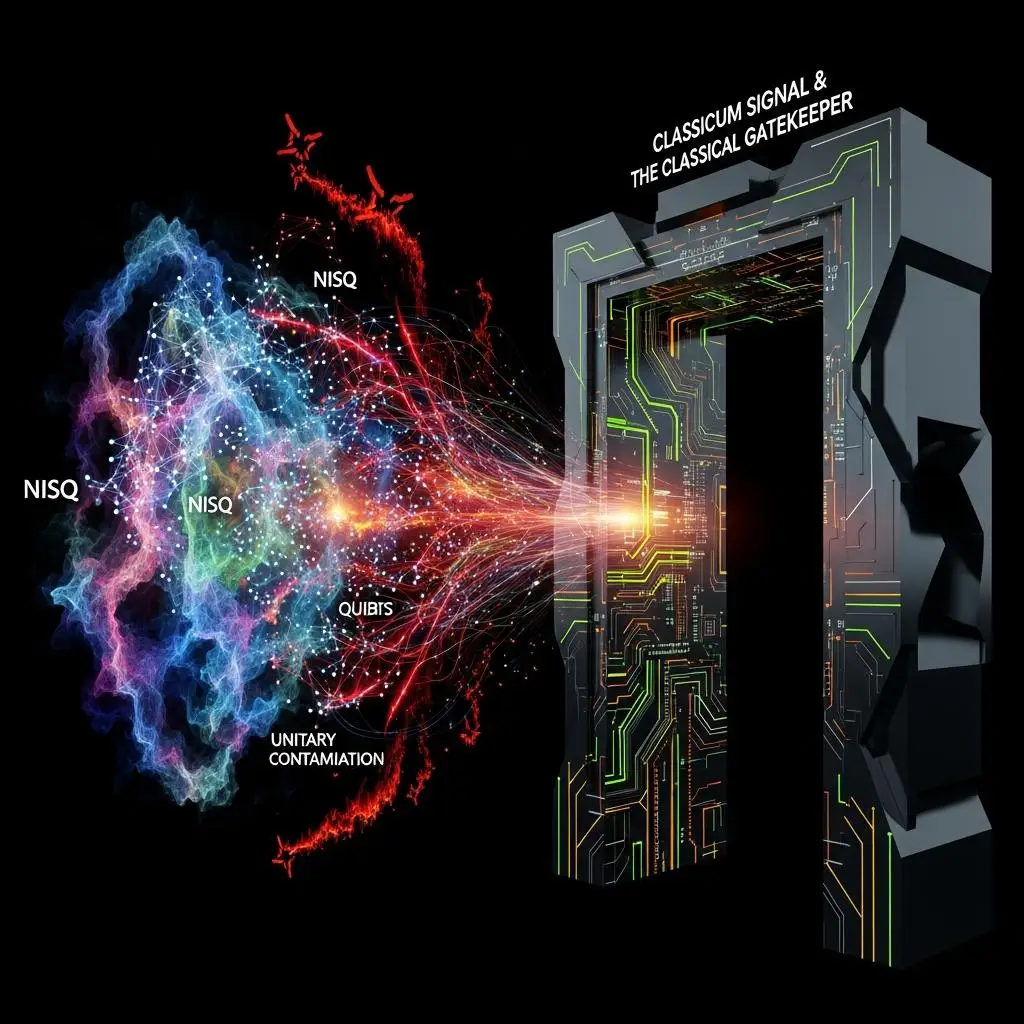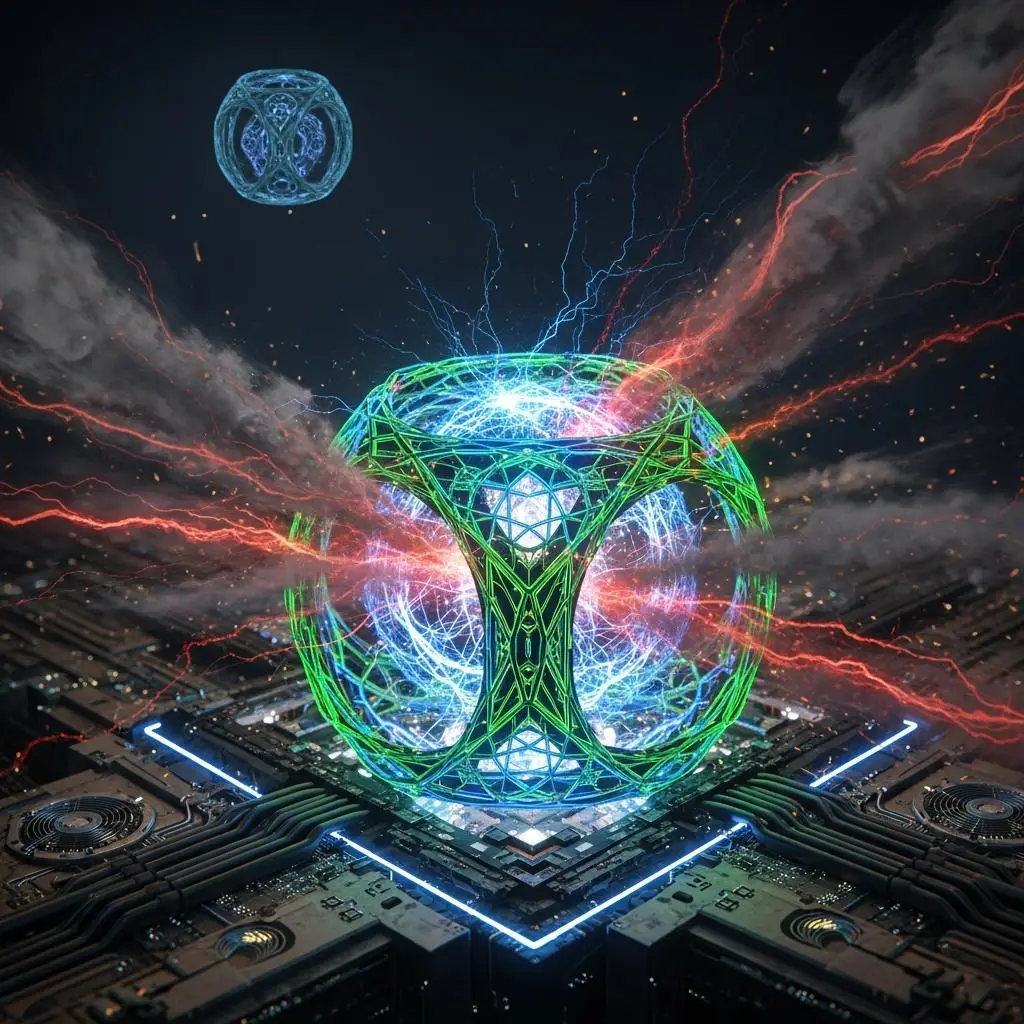

Most of what’s being peddled as “quantum advantage” today feels like a beautifully rendered CGI trailer for a movie that will never actually get made. We’re drowning in colorful galaxies and 3D atom animations while the fundamental hardware—the *real* circuitry—is still choking on its own latency. You hear about quantum supremacy, sure, but the truth is, the computational supremacy in quantum simulation is still being dictated by the very classical systems we’re trying to escape.
Bridging Theoretical Promise and Practical Supremacy
This isn’t about philosophical debates on the ultimate state of fault-tolerant quantum computing, nor is it about the siren song of theoretical speedups on papers. This is about the grit and grime of making actual quantum circuits do *something* useful, right now, on the hardware that exists. We’re talking about the practical limitations, the “ghost in the circuit” that makes your carefully constructed quantum states evaporate like mist under a heat lamp.
Weaponizing NISQ Imperfections for Computational Supremacy in Quantum Simulation
Our approach at Firebringer Quantum flips this script. We don’t wait for the mythological beast of fault tolerance to materialize. Instead, we treat the current generation of noisy intermediate-scale quantum (NISQ) hardware not as a fragile infant needing constant coddling, but as a belligerent sparring partner. We’re developing “Hardware Optimized Techniques” (H.O.T. Architecture) that acknowledge the inherent imperfections—the “unitary contamination” in academic code that screams for perfect fidelity—and weaponize them, or at least, route around them effectively.
Topology-Resilient Computational Supremacy in Quantum Simulation
We’ve seen this principle in action when tackling problems like the Elliptic Curve Discrete Logarithm Problem (ECDLP). This is a cryptographically relevant benchmark, far more indicative of useful quantum computation than toy examples. By mapping Shor-style period-finding algorithms onto our recursively geometric gate structures, each elliptic curve operation is designed not just for algorithmic correctness but for physical resilience. The noise that would cripple a standard circuit is systematically mitigated by the circuit’s very topology.
Harnessing Quantum Simulation for Computational Supremacy
This isn’t just a theoretical supposition; it’s a testable hypothesis. The question for you, the academic rebel and boundary-pushing programmer, is: how far can you take this? Can you design recursive geometric circuits that further exploit symmetries for specific ECDLP instances? What are the optimal orphan exclusion criteria for different noise profiles? Can you develop new cryptanalytic benchmarks that stress-test these H.O.T. architectures in novel ways, revealing new avenues for computational supremacy in quantum simulation?
For More Check Out