
Quantum Supremacy is Already Here: The Ticking Clock for Your Encryption
You’ve probably seen the headlines, the glossy animations of swirling qubits, all promising a world transformed by quantum computers. But for those of us actually building on this frontier, the conversation shifts. It’s less about a distant, hypothetical “quantum future” and more about the tangible, immediate threat to everything we secure today.
The Quantum Cryptographic Race Is Already Lost
The sheer ambition of the quantum computing agenda often obscures a more pressing reality: our existing cryptographic infrastructure is, frankly, toast. The very algorithms that secure our online transactions, our sensitive data, and even our national security are vulnerable to the brute-force capabilities of a sufficiently powerful quantum computer. It’s not a question of *if* this happens, but *when*.
The Race for Quantum Supremacy: From Abstract to Engineering
This is where the concept of “Quantum Threat Mitigation” moves from abstract security advisory to a hard engineering problem. The race for quantum supremacy is real, and its implications for cryptography are dire. While the academic and corporate worlds chase the grand prize of universal quantum computation, we’re focused on a more immediate, pragmatic goal: pushing the boundaries of what’s possible on today’s Noisy Intermediate-Scale Quantum (NISQ) devices.
Race Against Quantum Error Correction
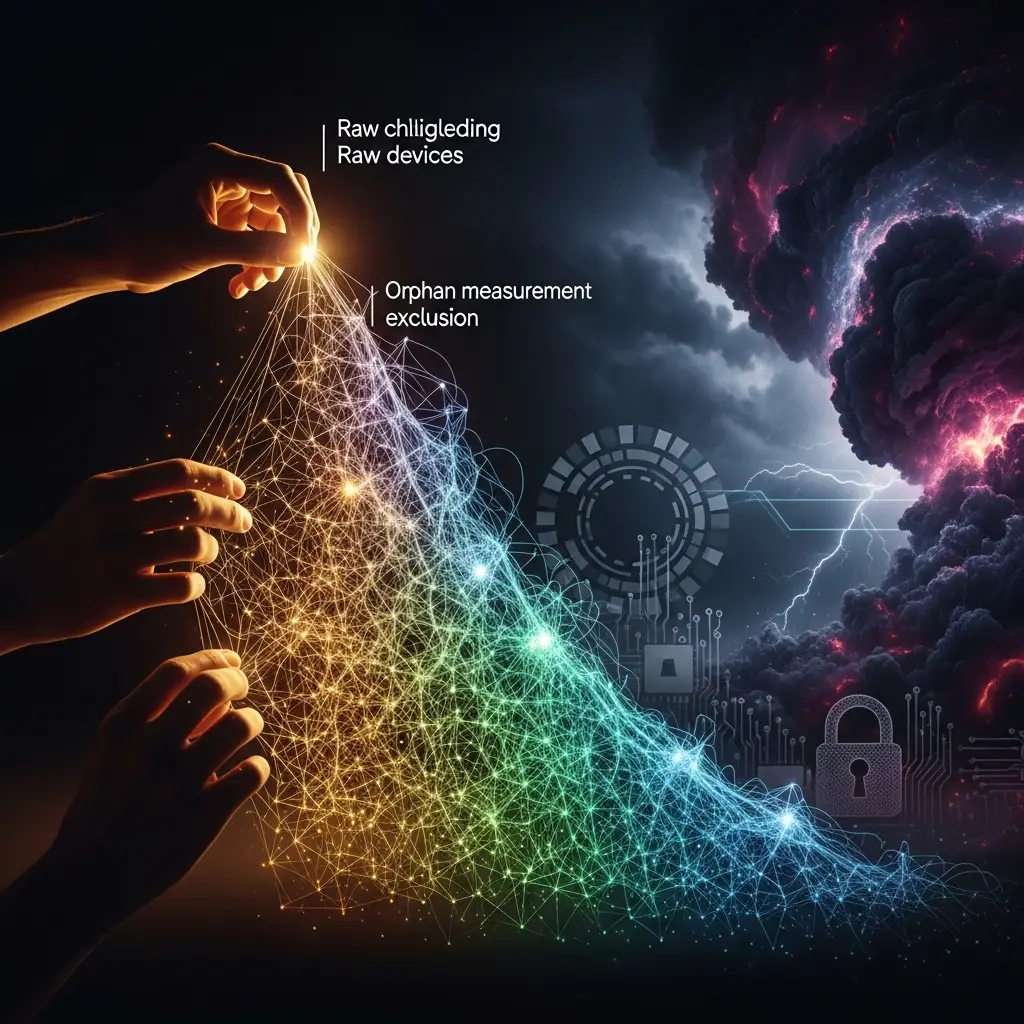
A key component of this strategy is what we’ve termed “orphan measurement exclusion” in our V5 framework. This isn’t just a data-cleaning hack; it’s a fundamental aspect of the programming model. We’re not passively accepting every readout; we’re actively identifying and filtering out anomalous measurement outcomes – the “orphans” – that corrupt our interference patterns. These aren’t random glitches; they’re often symptomatic of underlying qubit instability or readout errors.
The Engineering Race for Quantum Supremacy
When we wrap this entire ECDLP algorithm in the V5 measurement discipline, we can achieve outcomes that, by standard resource estimates, appear “beyond reach” on current hardware. This is the crucial distinction: standard estimates assume flat circuits, no sophisticated measurement filtering, and conventional noise models. Our approach, by contrast, views circuit shape, recursion depth, and measurement logic as tunable error-mitigation parameters. It’s a demonstrable proof that by carefully engineering the quantum program, we can push the practical boundaries of what today’s hardware can achieve, directly addressing the impending quantum threat to encryption without waiting for the mythical, fully fault-tolerant future. This is the tangible, immediate work of building the quantum present.
For More Check Out