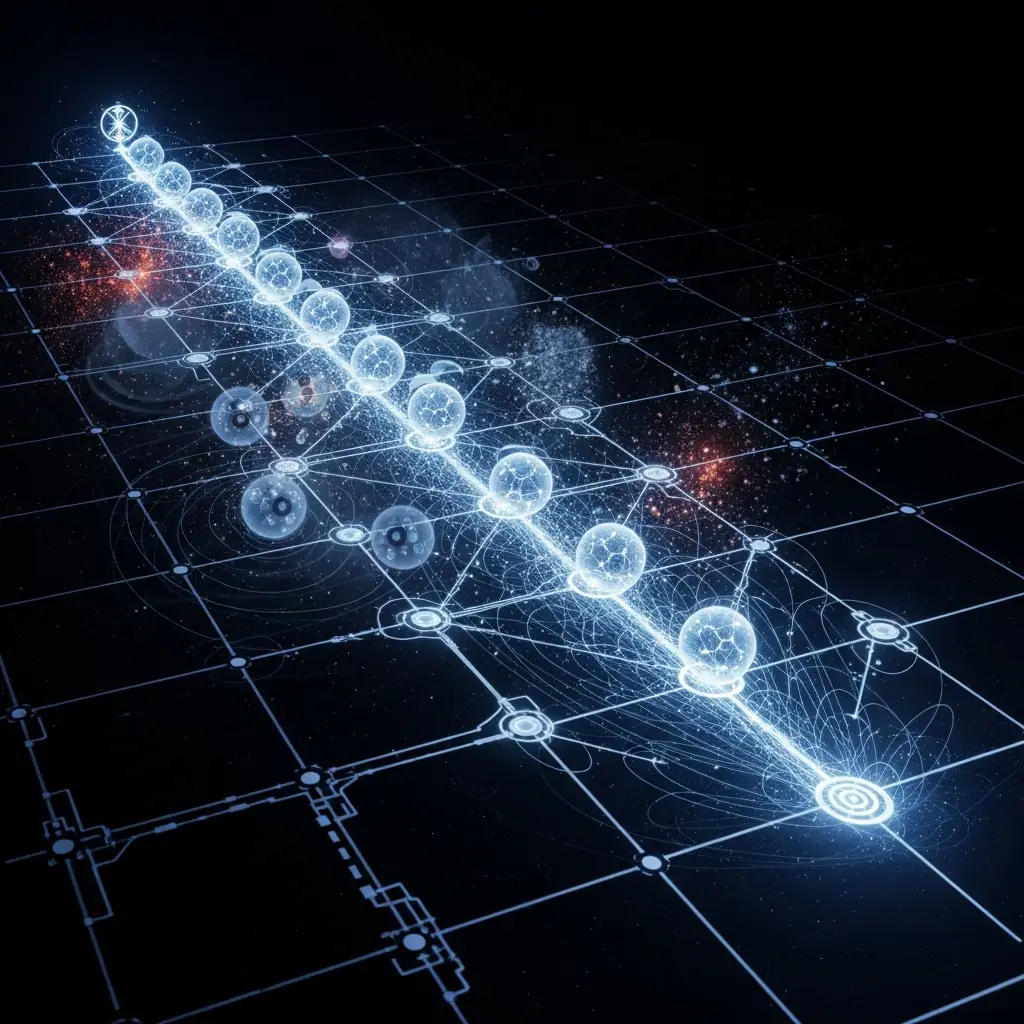
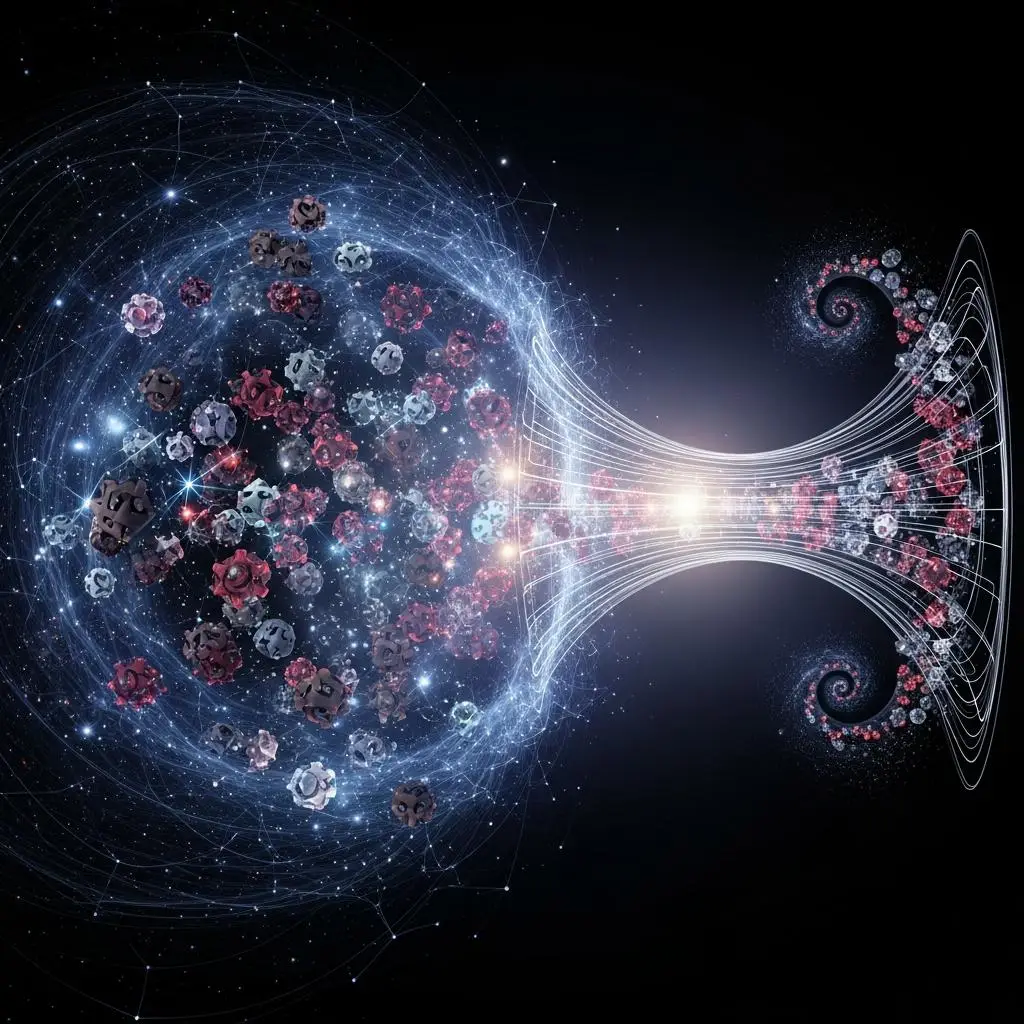

Alright, let’s cut through the noise. You’re building quantum circuits, probably wrestling with IBM’s latest backend, maybe even eyeing a 27-qubit island like ‘Palomar’ for some entanglement-driven computation. Then, BAM. You hit mid-circuit measurement, and suddenly, the results are… fuzzy.
Superposition Principle Collapses: The Measurement Rug-Pull
The core problem, as we’re seeing it in our work pushing NISQ hardware, isn’t just the inherent noise. It’s the *measurement* phase, especially mid-circuit. You’ve got your qubits entangled, in superposition, doing their quantum thing, but then you probe them. If even a small fraction of those qubits have decohered in ways that their quantum state isn’t fully collapsed or is exhibiting anomalous behavior, they start to “rug” the entire measurement outcome.
Circuits Harnessing Superposition: Measurement as Algorithm
This is where the H.O.T. Framework starts to make some noise. Instead of papering over these issues with theoretical error correction that’s still vaporware, we’re building solutions *around* the hardware’s limitations. For mid-circuit measurement, the key is V5 orphan measurement exclusion. This isn’t just slapping a filter on the data *after* the fact. It’s treating the measurement process itself as a critical part of the algorithm.
Selecting Superposition from Noisy Circuits
This allows us to salvage viable data from otherwise noisy runs. The effective SPAM fidelity isn’t magically improved; it’s *selected for*. By designing circuits and readout mappings that make these orphans easier to detect and isolate, we can push the boundaries of what looks like useful computation.
Leveraging Superposition Principle Circuits for Reliable Quantum Algorithms
This methodology means that your superposition principle circuits, especially those used in Shor- or Regev-style constructions for problems like ECDLP, don’t have to be buried under the weight of rogue measurements. You can start extracting reliable results. The next benchmark isn’t a larger number of qubits; it’s demonstrating useful algorithms by being smarter about *how* we measure the ones we have.
For More Check Out