
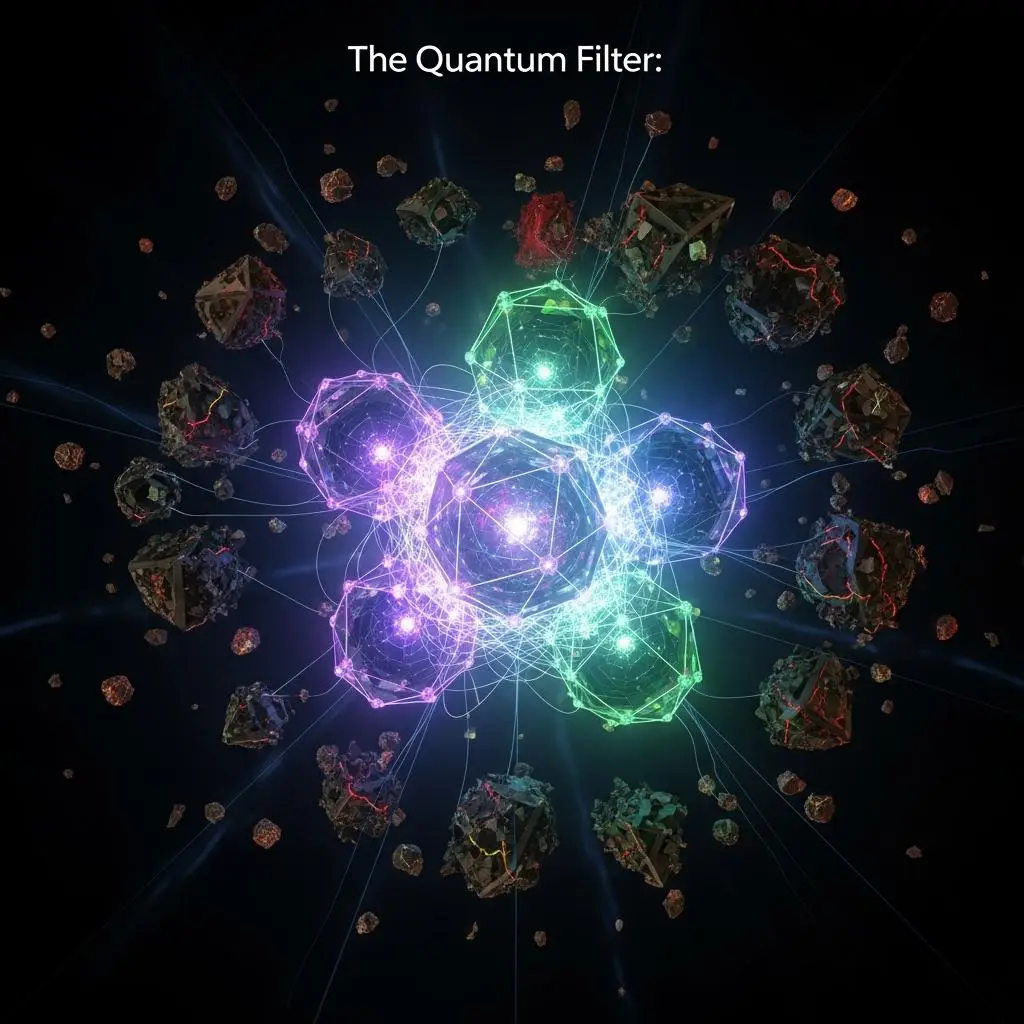

Alright, let’s cut through the noise. This isn’t just a hiccup in your routine; it’s the elephant in the room for every single NISQ device out there. The boogeyman isn’t the gate fidelity, not really. It’s the spectral bleed from “orphan qubits” – those decohering companions that taint your mid-circuit measurements.
Superposition Principle Circuits: Navigating the Unraveling State
We’re talking about the fundamental battleground of superposition principle circuits: how do you extract a meaningful result when a significant chunk of your system is actively unraveling, poisoning the very quantum state you’re trying to interrogate? This isn’t about waiting for error correction to magically appear. It’s about understanding the hardware’s limitations *today* and building around them.
Leveraging Superposition: Dynamic Exclusion for NISQ Computing
By implementing a dynamic, calibration-aware orphan qubit detection and exclusion strategy during mid-circuit measurement, we can significantly improve the effective SPAM fidelity and extract valid computation from superposition principle circuits on NISQ hardware, even when the number of *actively usable* qubits drops below nominal levels due to decoherence.
Superposition Principle Circuits: Orphan Exclusion Impact
Take a known superposition principle circuit (e.g., a few-qubit QFT). Run it on your chosen backend with standard measurement. Record the fidelity and accuracy of the output. Now, implement the Orphan Exclusion routine as described. Use your backend’s fingerprint to define the orphan threshold. Map the circuit to minimize contamination visibility. Compare the fidelities. Do you see a measurable improvement in the effective SPAM fidelity and the accuracy of the final result, *even if the number of effective qubits decreased*?
Orphan Qubit Management for Superposition Principle Circuits
By actively managing orphan qubits during mid-circuit measurement, we’re pushing the practical capabilities of superposition principle circuits on the hardware we have, not the hardware we wish we had. See what benchmarks you can set.
For More Check Out