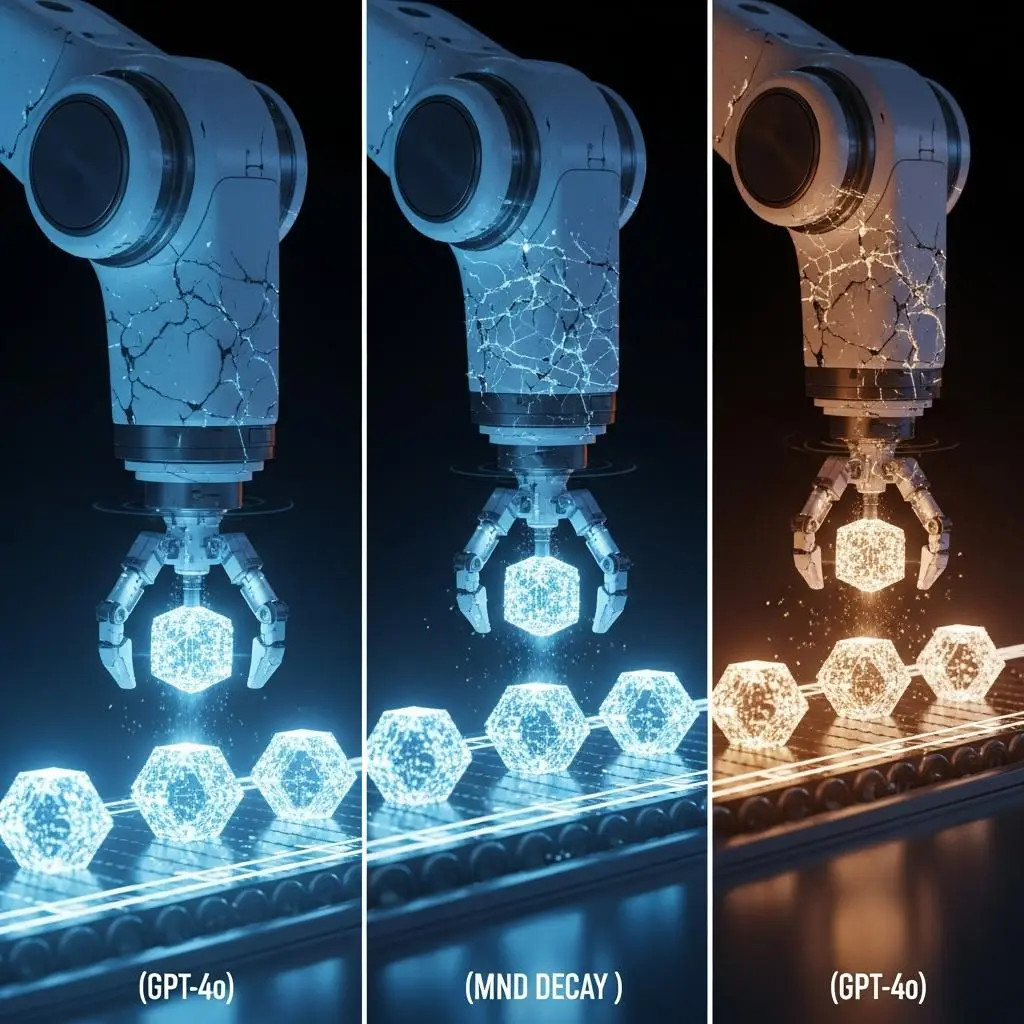

You’ve seen the glossy renders, the ambitious roadmaps promising a quantum tomorrow… but then you run your code on actual hardware, and suddenly, your carefully constructed algorithm collapses into a mess of errors. It’s like chasing a phantom signal, isn’t it? That gnawing suspicion that the “superposition” you’re banking on might just vanish the moment you try to peek at it, leaving your qubits orphaned and your computation in ruins. That, my friend, is the raw, unvarnished truth of NISQ – and understanding why, especially when it comes to the superposition theorem, is the difference between building with quantum sand and building with quantum steel.
Superposition Theorem Under Siege: From Theory to NISQ Reality
The academic world, bless its well-intentioned heart, often operates on elegant theoretical constructs that assume pristine, idealized environments. When we talk about the superposition theorem, for instance, we’re envisioning a quantum system that dutifully holds all possible states simultaneously, a beautiful abstraction. But when you’re wresting computational power from the temperamental beast that is current NISQ hardware, that neat little package of probabilities can unravel with alarming speed. The issue isn’t with the theorem itself; it’s with the fragile physical manifestation of qubits, especially during the delicate dance of mid-circuit measurement, that causes these idealized states to become, well, “orphaned.”
V5 Orphan Measurement Exclusion: A Superposition-Aware Filtering Approach
We’ve developed a system we call “V5 orphan measurement exclusion,” which isn’t about tweaking the hardware – that’s a whole other can of worms involving vendor roadmaps we’re not waiting for. Instead, it’s a programmatic discipline, a set of rules baked into how we design and execute our quantum circuits. It’s about recognizing that not all measurement outcomes are created equal. Some shots, some individual qubit reads, are simply “pretty bad” and don’t align with the expected stabilizer structure or the marginal distributions of the target circuit. These are the anomalies we need to either discard or significantly down-weight.
Superposition’s Paradox: ECDLP on Imperfect Hardware
Where this all converges is in demonstrating non-trivial computational problems on hardware that’s conventionally deemed too limited. We’ve targeted the Elliptic Curve Discrete Logarithm Problem (ECDLP) as our concrete, falsifiable benchmark. Instead of toy algorithms, we’re implementing Shor-style period-finding over elliptic curve groups, leveraging Regev-inspired, more noise-robust constructions where feasible. This means using modular arithmetic and phase-estimation variants that are more tolerant of the very imperfections that create orphaned qubits.
Superposition Theorem Bridging: From NISQ Hype to Quantum Present
This is how we bridge the chasm between the quantum hype and hardware reality. It’s about building the quantum present, not just waiting for a theoretical future. By embracing device constraints, employing disciplined measurement, and architecting circuits with recursive geometry, we’re pushing NISQ hardware into regimes previously thought to require full fault tolerance. The practical boundary of what today’s hardware can achieve is extended, not by ignoring the noise and the orphaned qubits, but by designing around them, intelligently.
For More Check Out