
In the land of superconducting qubits, electricity defies the ordinary, flowing without resistance and opening doors to possibilities that stretch beyond conventional imagination. Welcome to a world where currents navigate seamlessly through superconducting circuits, presenting an entirely new landscape for quantum computing.
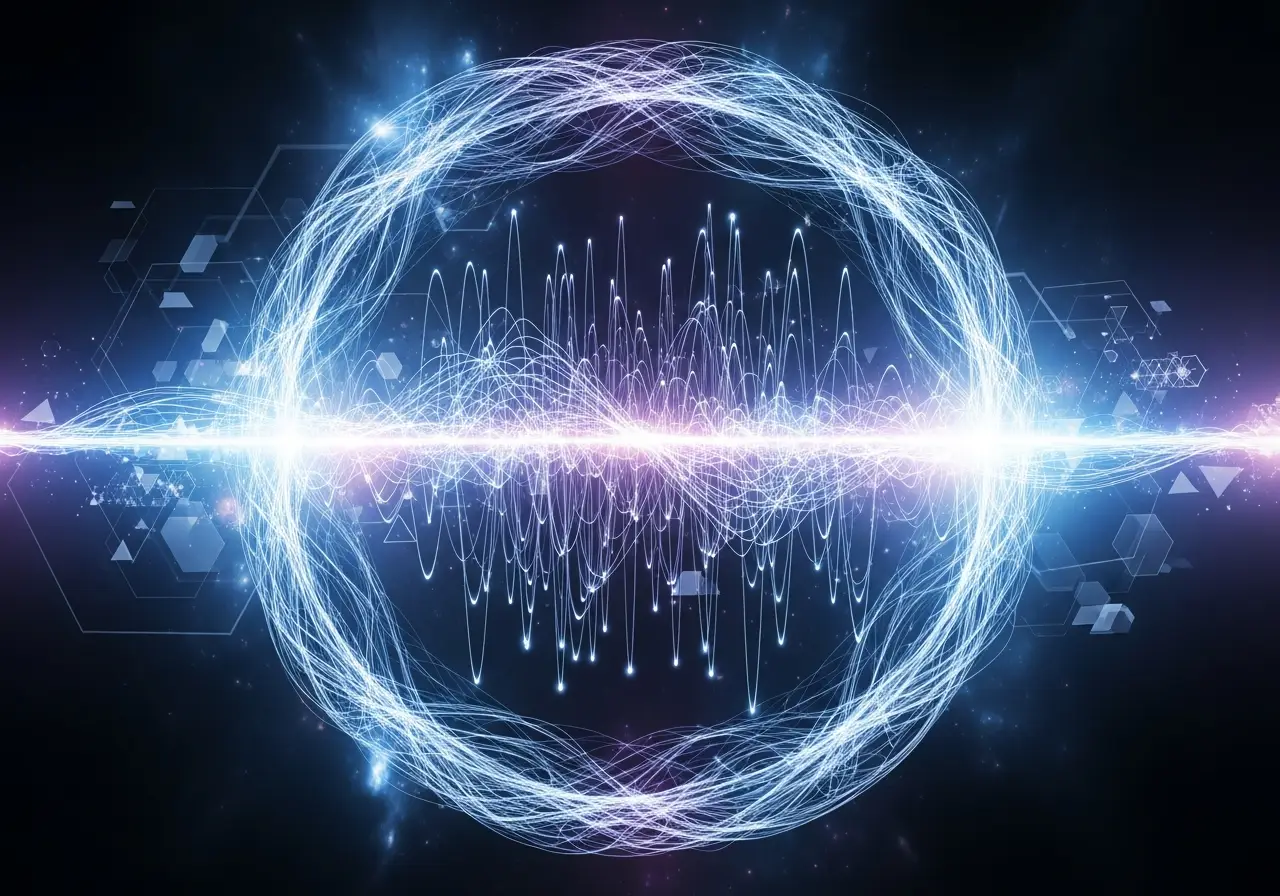
To grasp the significance of superconductors in quantum computing, we must first understand coherence. Imagine a perfectly synchronized dance where every movement is in harmony. That’s coherence in superconducting qubits—a finely tuned relationship among electrons allowing them to maintain a state of zero resistance.
How does this happen? It’s all about quantum mechanics, where particles exist in superposition, exemplifying a blend of possibilities. At ultra-low temperatures, materials become superconductive, where electrons form pairs known as Cooper pairs, gliding through the material as if on a faultless highway—no roadblocks, no friction.
In this realm, superconducting qubits allow quantum bits to embody both zeroes and ones, a phenomenon known as superposition. Picture a coin that rests in the air, spinning without choosing a side; this property grants quantum computers computing potential far beyond the classical.
Yet, achieving and maintaining these states is no small feat. Superconductivity demands near-absolute zero temperatures. Imagine a lab where researchers braving the chill of liquid nitrogen work to preserve qubits in their fleeting quantum grace. But these pristine states are fragile; external influences such as environmental noise threaten decoherence, necessitating ongoing refinements in qubit design to ensure stability.
The potential applications are vast, from advancements in quantum cryptography and complex problem-solving to transformations in fields like pharmaceuticals and materials science. This exploration not only pushes the frontiers of technology but also our understanding of reality itself, challenging us to rethink where science and philosophy intersect.
Embracing the superconducting qubit journey invites a reimagining of the universe, encouraging leaps in knowledge and capability. As we stand at the cusp of this quantum expansion, the conventional limits of reality begin to blur, and the extraordinary is increasingly within reach.