
Welcome to an exciting world where the traditional laws of computing take on an entirely new form: quantum computing. Picture a realm where qubits don’t just offer binary options, but instead revel in the possibilities of superposition and entanglement. This is a domain that promises to tackle challenges previously beyond our reach with an entirely different kind of efficiency. But, how do we unlock this potential?
The Quantum Instruction Set is your toolkit for unraveling this complex yet promising landscape. It focuses on the core operations that turn theoretical concepts into practical applications. Unlike classical bits that are resolute in their state of either 0 or 1, qubits are dynamic by nature. With superposition, they can exist in both states simultaneously, exploring multiple possibilities and opening pathways to rapid problem-solving.
To manipulate these qubits, we rely on essential quantum operations, akin to the logic gates in conventional computing. Think of each quantum gate as a storyteller with a unique role. The Hadamard gate, for instance, catapults a qubit into a blend of possibilities, enabling parallel processing that was once unimaginable. It’s like spinning a coin with infinite possibilities of where it could land, simultaneously being both heads and tails.
Then there’s the Pauli-X gate, which flips a qubit’s state. It’s a simple but vital maneuver, akin to flipping assumptions and opening doors to new solutions. Equally pivotal is the CNOT gate, which introduces qubit entanglement. This operation links qubits, creating an intricate dance of cause and effect that mirrors complex relationships in our universe.
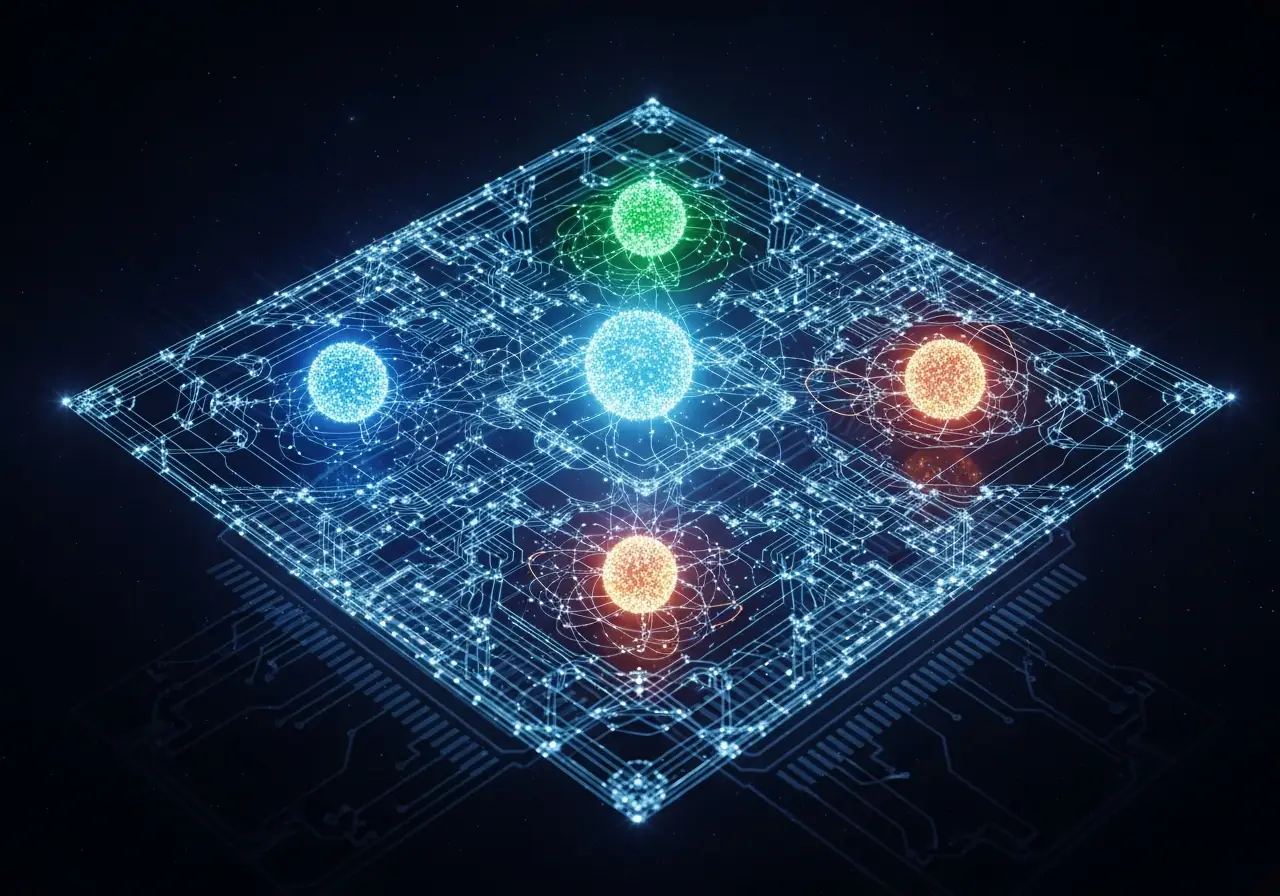
By strategically arranging these operations into quantum circuits, we set the stage for more complex computations that could redefine our understanding of technology. It’s like weaving a story where each thread contributes to a larger tapestry of meaning and function.
Embracing the Quantum Instruction Set isn’t just about new technology; it’s about expanding our understanding of what is possible. Every manipulation of qubits is a step towards unlocking the mysteries of reality itself. As we master these operations, we’re not just learning a new language of computation; we’re writing new chapters of innovation and discovery, challenging ourselves to think beyond the confines of classical limitations.
This journey into quantum computing is a collaborative one, inviting us all to be active participants in its unfolding story. Each step we take with qubits redefines our capacity to solve problems and transcend perceived boundaries. So, as we embark on this quantum exploration, let’s celebrate the insights and potential that await us, altering the very fabric of existence with each quantum operation we harness.