
In the intricate dance of subatomic particles, Bell’s Theorem stands as a testament to the strange but true nature of our universe. Here, the comfortable realities we know—like information traveling only within the confines of light’s speed or objects possessing fixed properties—are questioned, if not wholly overturned. This isn’t an exploration of the abstract; it is a journey into the very principles that structure our reality.
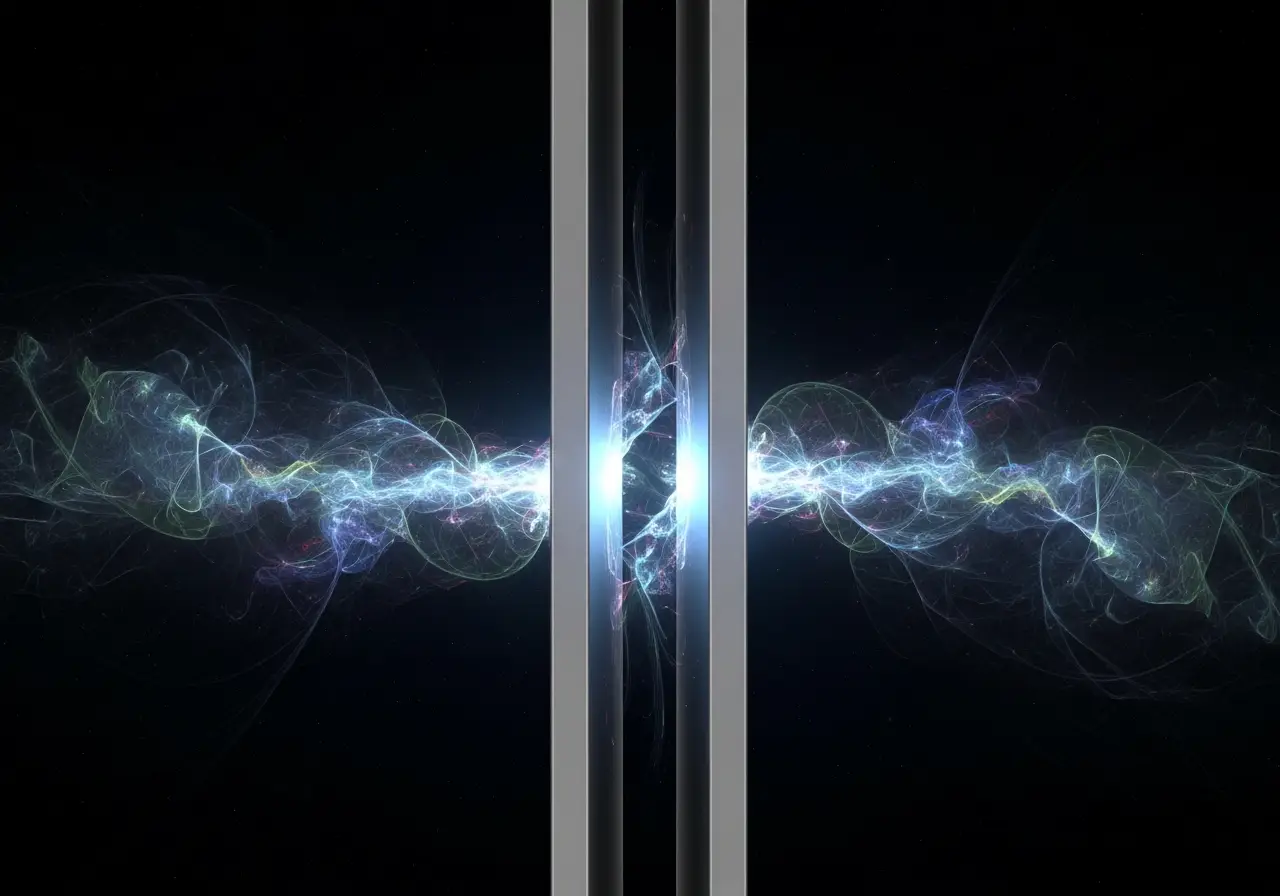
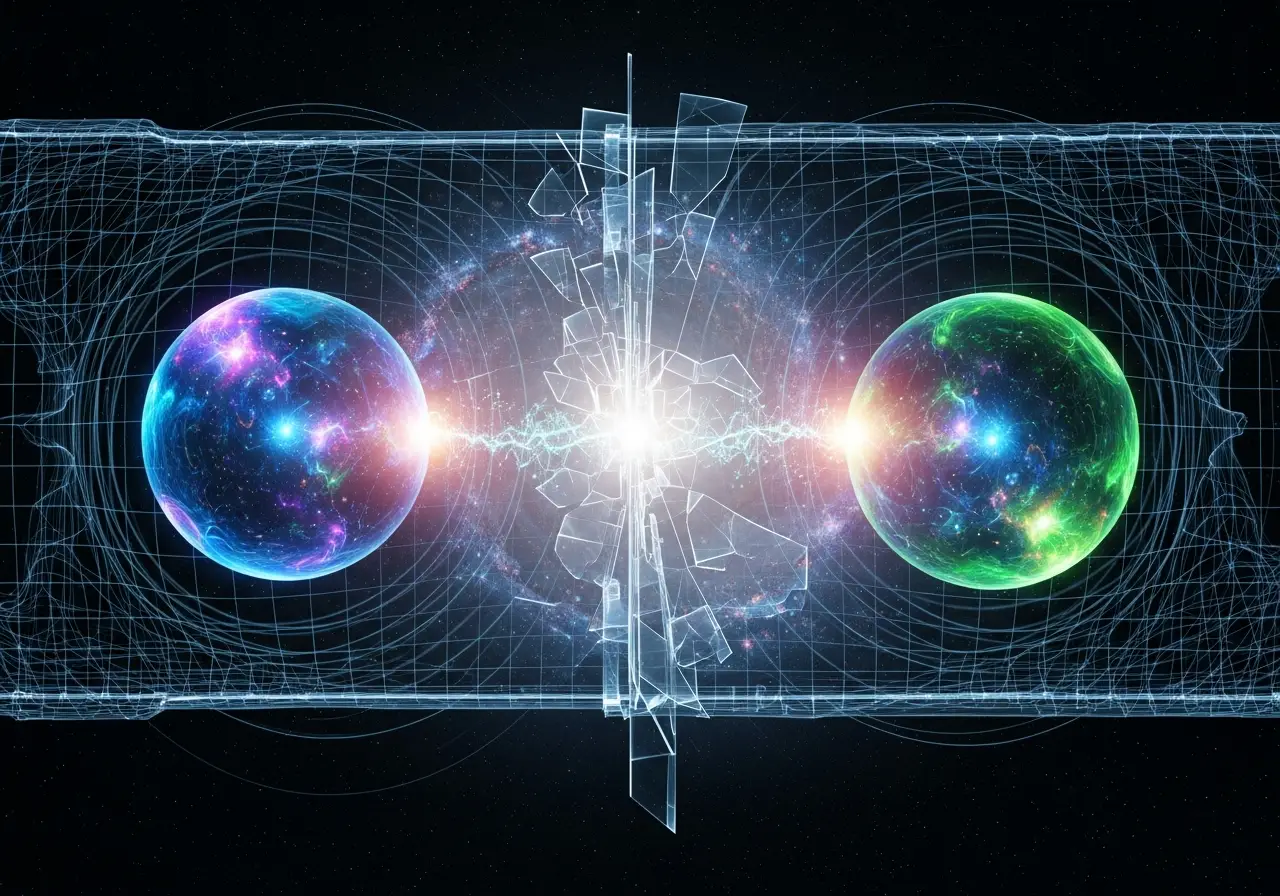
Imagine this: you’re watching two dancers who are miles apart, yet they move perfectly in sync. They share a rhythm unseen, unfelt—a connection that enters the realm of the unknown and unexplained. Such is the essence of entangled particles: their strange synchronicity, which seems to defy distance, is both a baffling and fascinating reality that demands a reevaluation of how we understand communication in the cosmos.
Consider the classic example of Alice and Bob. As they measure the properties of their respective entangled particles, they discover a pattern that stubbornly refuses the rules of local realism—a nod to how entangled partners may remain ‘aware’ of each other’s states, no matter the spaces between them. This revelation not only intrigues but also provokes a deeper thought on how interconnected we truly are with everything around us.
At the heart of this enigma lies a question about our role in shaping reality. Are we simply observers of this cosmic performance, or do our observations impact the unfolding drama? To borrow from an everyday analogy, think of flipping a coin: in its brief journey through the air, it embodies all possibilities until it lands. In quantum terms, this superposition allows entangled particles to mirror each other’s fate in a dance that seems choreographed by the universe itself.
Of course, not everyone agrees with this interpretation. Some propose hidden variables, unseen mechanisms that could explain the seemingly conspiratorial behavior of particles without toppling classical physics. Yet, the consistent results of experiments in favor of Bell’s findings present a compelling argument that the universe operates on principles more bizarre than our traditional mindsets can comfortably digest.
As we ponder these profound concepts, we confront a central mystery: what does it truly mean to observe the universe? In diving into Bell’s Theorem, we might stumble upon insights not just about the subatomic world but about our very consciousness. Are we passive spectators, or is the universe whispering invitations for us to dance along, nudging us to accept the possibility that our observations might indeed shape reality?
For those willing to ponder these mysteries, Bell’s Theorem isn’t just about the dance of particles; it’s a call to embrace an understanding of the universe that is deeply interconnected, mystifying, and wondrous beyond belief. As we continue to untangle these cosmic mysteries, we are reminded that the universe’s secrets lie not just in the stars, but within the very fabric of its own bizarre, beautiful dance.