

Standing at the edge of a lake, each ripple tells a story—one moment it’s a mirror, and the next, a mystery wrapped in fog. This isn’t just poetic observation; it’s akin to the universe’s dance, where quantum particles pirouette through existence, and environmental decoherence shuffles them into disorder. This isn’t merely highbrow physics but a lens through which we see how the world nudges our reality into shape.
Decoherence is a term that echoes in physics circles but touches everyday life more than we think. Imagine Schrödinger’s cat—alive and dead until the box is opened. Introduce environmental chaos to the equation, and the mystery dissipates into certainty. Our digital world, with its incessant interruptions, does the same to the meditative state, shattering tranquility with every notification ping.
Think of quantum mechanics as an orchestra where each particle plays its own melody. In harmony, they produce a symphonic wonder that is our coherent reality. Environmental factors—temperature, noise, observation—are the errant notes that lead to the jarring transition to classical certainty, not unlike how static disrupts a radio tune.
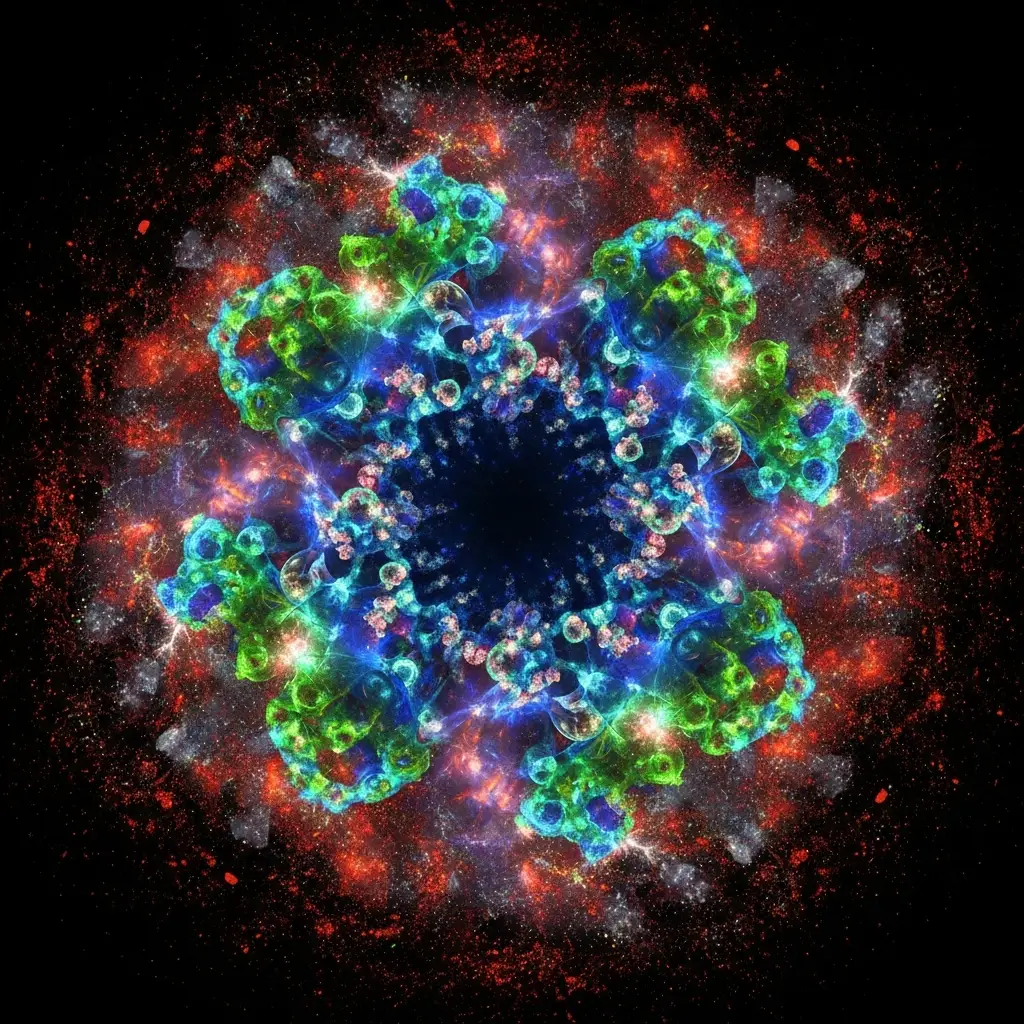
Visualize a fractal—a symbol of infinite complexity and vibrant possibility. That’s the quantum you. Then comes the environment, like a storm turning colored leaves into muddied debris. It’s these interactions that strip away our quantum vibrancy, anchoring us in the familiar grayscale of daily life.
The importance of environmental decoherence transcends theory and influences our day-to-day experiences. It is in the muted colors of a rushed commute or the dissonance of a chaotic home. With each environmental interaction, the possibility of coherence or disarray in our lives grows.
This understanding doesn’t just stay within the confines of abstract thought—it stretches into our approach to global issues like climate change. As we alter our environment, we might be unwittingly sabotaging not just quantum coherence but also societal balance. Just as a musician learns to tune an instrument, we must learn to harmonize with our environment to maintain coherence and clarity.
So, what happens when we manage to stave off decoherence? A future of quantum computing might bring capabilities that stretch imagination’s limits. Recognizing environmental impacts on these quantum states could transform technological innovation and shift our understanding of coherence from theoretical musings to practical applications.
Our reality is marked by the interplay of choices and consequences, akin to a pebble’s ripples on a still pond. Acknowledging the environment’s nuanced role in decoherence elevates our appreciation for the intertwined nature of all life. Each action resonates throughout the cosmos, underlining our responsibility to this interconnected web.
As we deepen our understanding, we invite collective awareness towards environmental restoration. Our landscapes thirst for a richer symbiosis with us. By nurturing this relationship, we can help preserve the coherence of our realities, moving toward greater harmony. Amidst the chaos, every breath we take can become a step toward clarity, leading us back to that crystal-clear state where coherence once again reigns.
By turning our focus to how we engage with our environment, we can foster harmony over discord, interweaving our lives with the universe through intentional actions and choices. Let us strive to align ourselves more closely with the factors that nurture coherence, infusing our journey with clarity and vitality. Explore this journey of interconnectedness and the role of technology at [FirebringerAI](https://firebringerai.com).