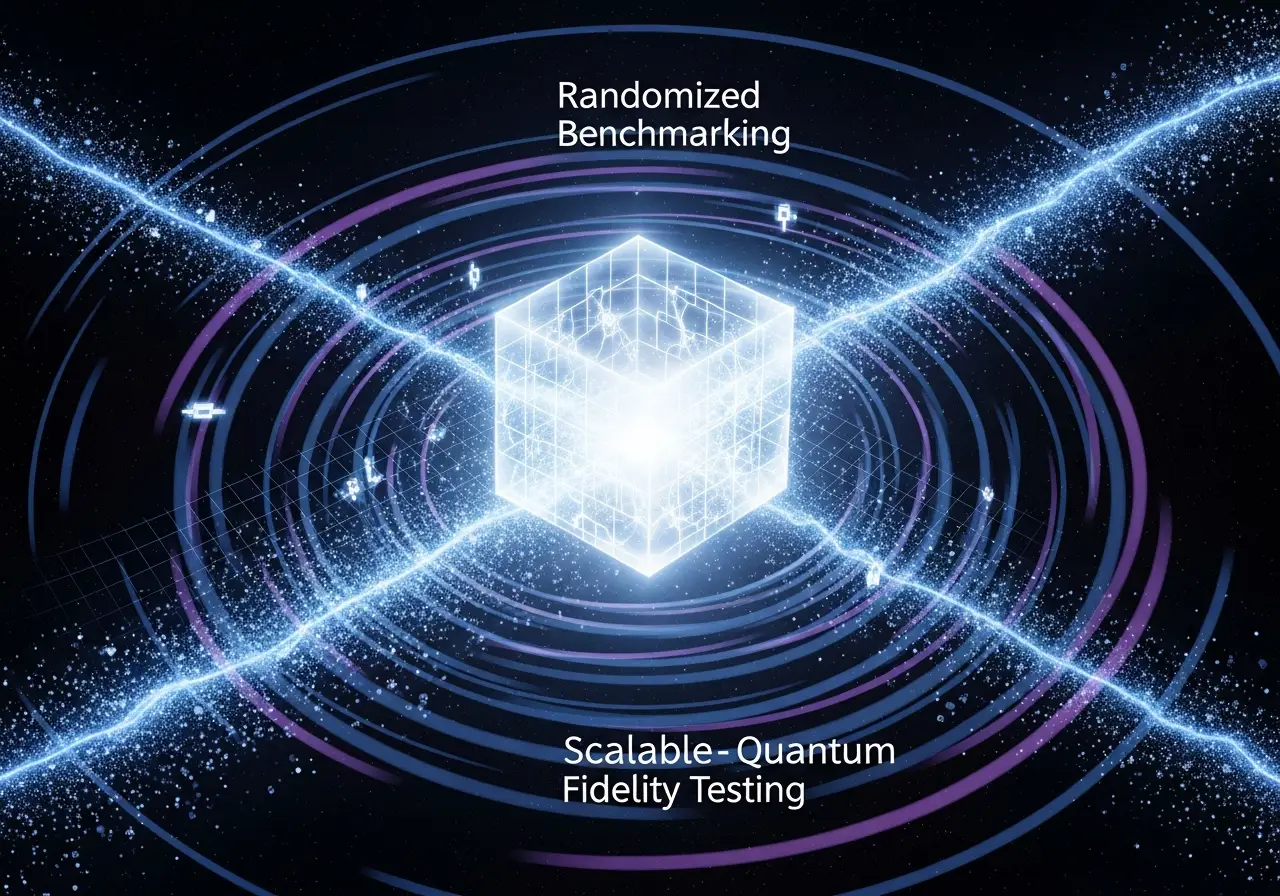

Standing at the frontier of quantum evolution feels like being on the cusp of an unprecedented journey. The push for precision in quantum systems isn’t just an academic pursuit—it’s crucial for the technology’s future. Think of quantum gates as essential puzzle pieces in the complex picture of quantum computing. Delving into Randomized Benchmarking and Scalable Quantum Fidelity Testing, we’re not just probing the quality of these puzzle pieces; we’re redefining what we expect from them.
Randomized Benchmarking, in simpler terms, is akin to a vigorous workout for quantum gates. Instead of painstakingly analyzing each gate error, this approach looks at a series of operations together. By mixing gate sequences and introducing randomness, we can cut through noise to see how well these gates really perform. It’s a practical way to get a quick sense of reliability without getting bogged down in every detail.
But understanding individual brilliance isn’t enough when aiming for quantum supremacy. Scalable Quantum Fidelity Testing complements Randomized Benchmarking by ensuring that as systems become more complex, their reliability scales up too. Picture this method as a way to assemble a stable structure without worrying whether it will hold—or wobble—under pressure. The focus is on making complex computations feasible and precise.
Coherent states offer a perfect analogy here. Imagine an orchestra where harmony is essential. When all instruments (or qubits) are in sync, the music is exquisite. However, one out-of-tune player can throw it all into disarray. These methods help identify potential rogue notes, allowing us to fine-tune harmony in quantum operations. By examining how coherence is maintained or lost, insights into quality become clearer.
In the fluid world of quantum systems, errors are a given. However, understanding them unlocks the pathway to improvement. Randomized Benchmarking and Scalable Quantum Fidelity Testing equip researchers with tools to not only measure fidelity but also to pinpoint errors—leading to better error-correction strategies, like cleaning the clutter out of dusty archives to pave a path forward.
The future of these methods stretches beyond just measurement. Consider their implications for quantum communication and cryptography. Ensuring the highest coherence and fidelity levels means more secure and efficient networks. These methods aren’t just diagnostics—they lay the groundwork for future innovations analogous to electricity’s era-defining impact.
At this crossroads where the unpredictable beauty of quantum mechanics meets precise science, we’re not merely observing change; we’re engineers of it. Each step in Benchmarking and Fidelity Testing takes us closer to a reality built on quantum clarity and coherence.
As you navigate this piece of the quantum puzzle, remember it’s about participation—not just watching from the sidelines. With every successful application, the fabric of quantum fidelity becomes tighter and more reliable. So, as we embark on this journey, let’s engage fully in shaping a technologically robust future, where every advancement is a dance step closer to realizing quantum’s immense potential.
For more on this quantum journey, visit [Firebringer AI](https://firebringerai.com).