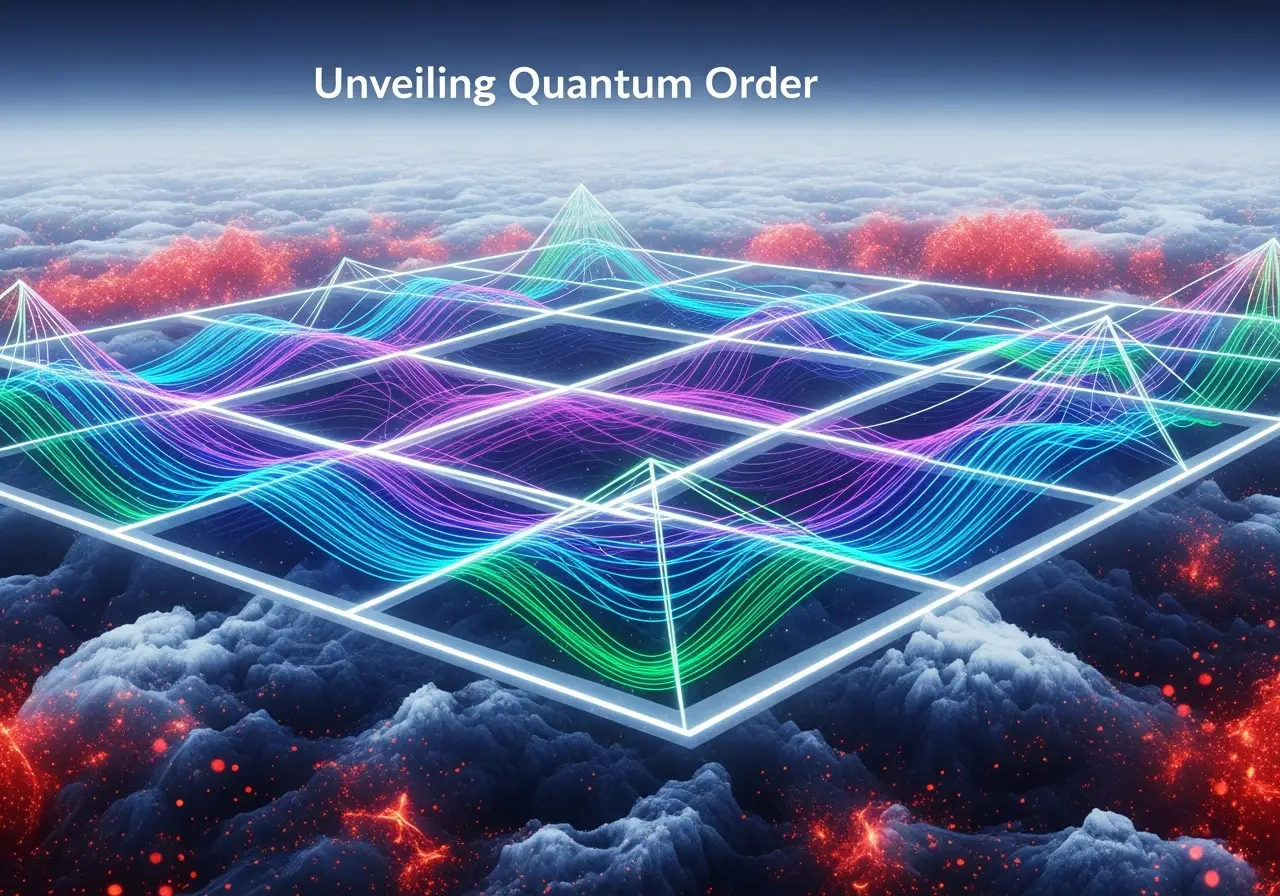

Let’s take a moment to ground ourselves in the reality-bending phenomenon known as the Quantum Hall Effect. Imagine entering a realm where electrons, typically predictable in their behavior, suddenly become part of a mesmerizing dance. This spectacle happens under intense magnetic fields and the chill of extreme cold. Here, particles arrange themselves into formations that are not easily disturbed, even by impurities or disruptions that would usually result in chaos. Envision it like navigating a busy city street — the electrons glide efficiently along pre-defined paths, bypassing disruptions like skilled commuters during rush hour.
These robust structures, known as topologically protected states, hold immense promise not only as quirky wonders of physics but as potential keystones for technological evolution. Think of a quantum computer that could revolutionize problem-solving with breathtaking efficiency, or materials engineered to redefine sustainability, like solar cells capturing more sunlight. Scientists are working with precision and care to harness this potential, balancing numerous variables to maintain coherence in these quantum states, much like a tightrope artist perfecting their craft.
In a world where the boundaries of what is possible are perpetually tested, the quest to understand and harness these topological states underlines our innate curiosity — the same drive that has propelled humanity from primitive tools to the digital age we embrace today. As researchers delve into these quantum realms, they are not just furthering science; they are crafting the groundwork for innovations that could shape our future. Let us continue this journey of discovery, inviting the universe’s dance of particles to guide us towards new frontiers of technology and understanding.