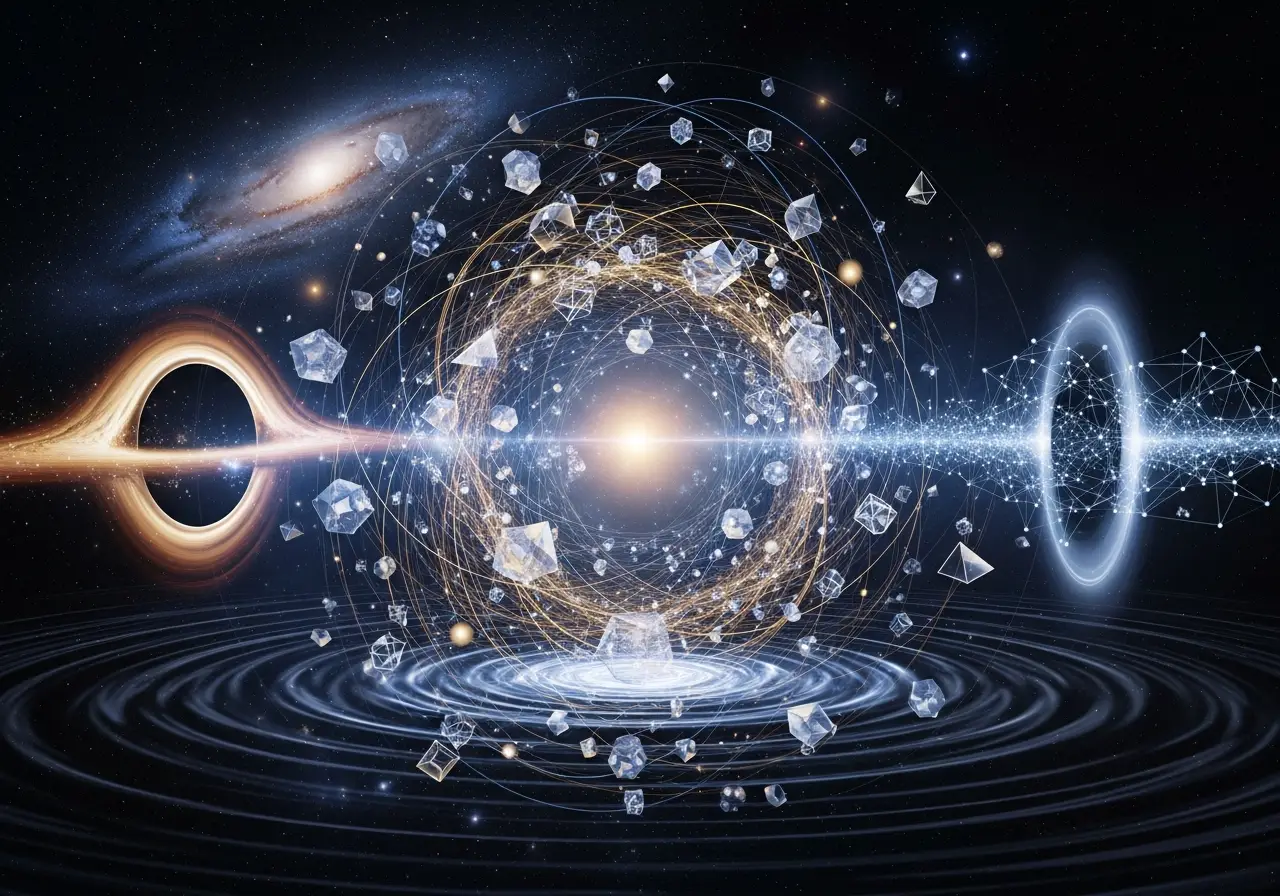

Exploring the intersection of quantum mechanics and classical physics is a journey through a fascinating world where uncertainty turns into certainty. Picture it: particles swirling in an unpredictable dance, before they settle into the everyday objects we know. At the core of this transformation is our understanding of superposition, where particles can exist in multiple states at once until they’re observed, collapsing into one definitive state.
This shift often hinges on interaction with the environment, known as decoherence. Similar to a cake at a party losing its pristine form when someone takes a slice, quantum possibilities narrow into one reality as particles interact with their surroundings. Factors like temperature can also tip the scale between quantum weirdness and classical predictability, with colder states favoring quantum behaviors.
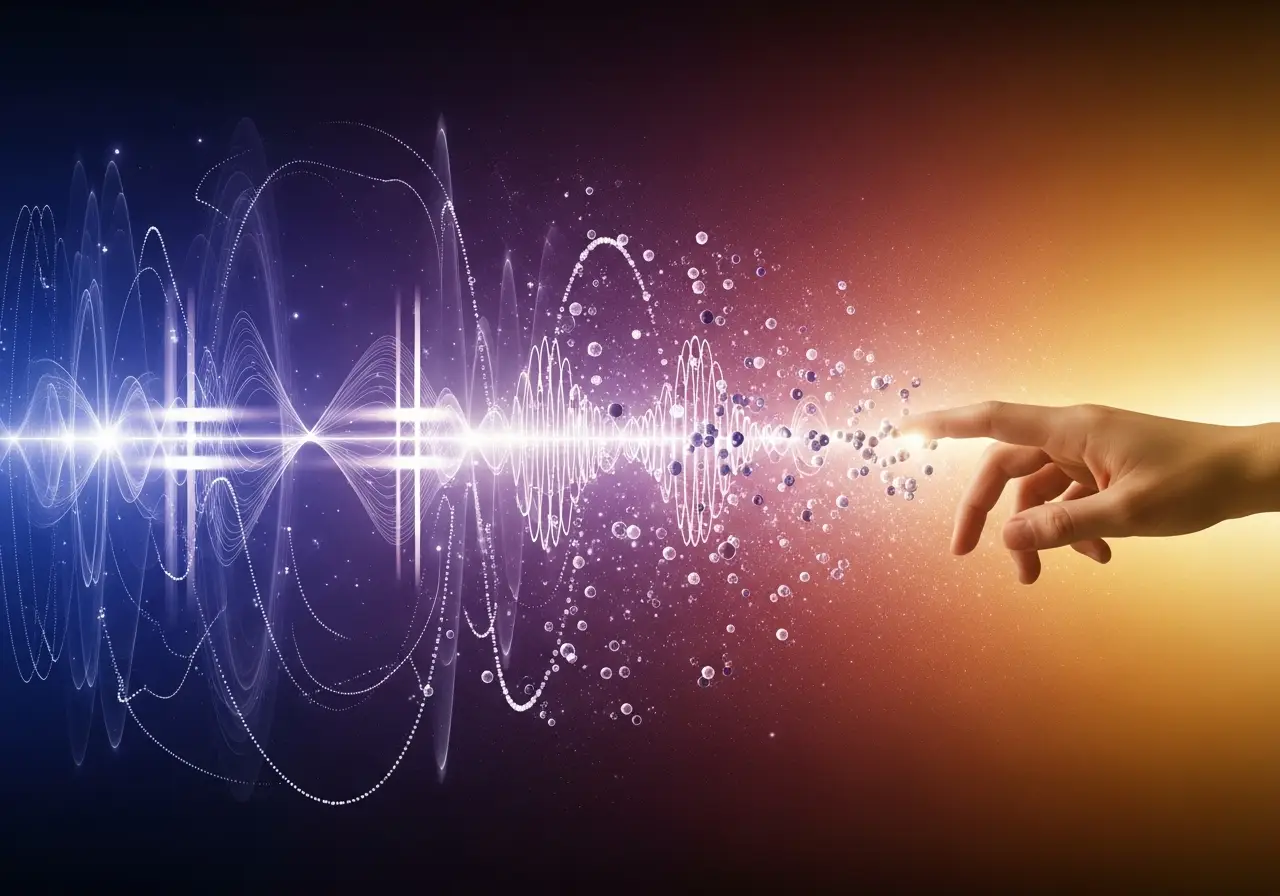
Light’s behavior is a prime example. It can live as a wave or a particle depending on how we interact with it. Observing light can force it into a wave-like or particle-like state, which underscores the power of observation in shaping reality.
Consider the double-slit experiment, which illustrates how observation can alter outcomes dramatically—light behaves differently when watched. It nudges us to question if reality itself shifts with our focus.
Quantum mechanics not only unlocks academic wonders but also powers breakthroughs in technology. Harnessing these transitions could push us into realms of innovation through quantum computing and cryptography.
This ongoing exploration marks our active role in understanding and participating in our reality. By probing these transitions, we’re not just deciphering the universe’s code but also tapping into the fundamental essences of existence. It’s an invitation to engage with the mysteries of life and consciousness, and perhaps, shape the reality we step into next. As we unravel these layers, we’re reminded of our potential to connect deeply with the universe’s vast tapestry.