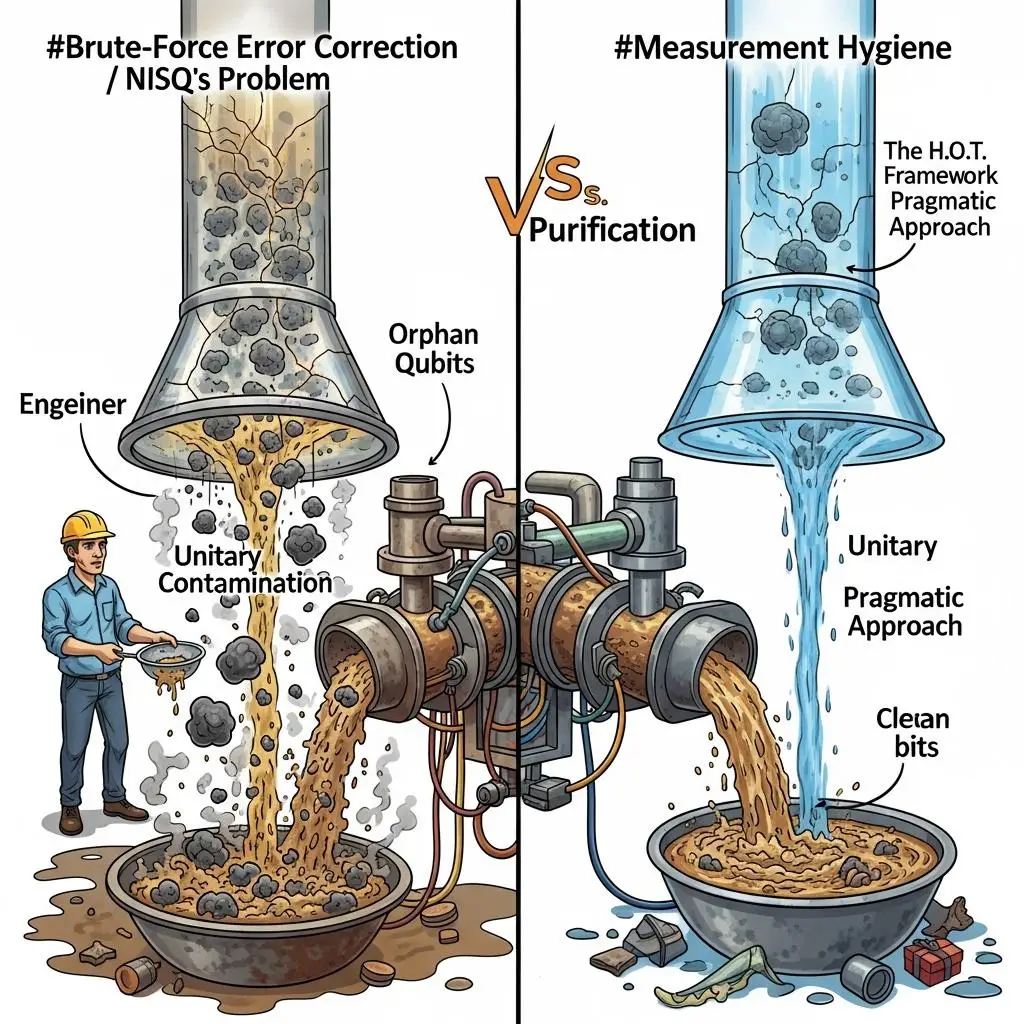
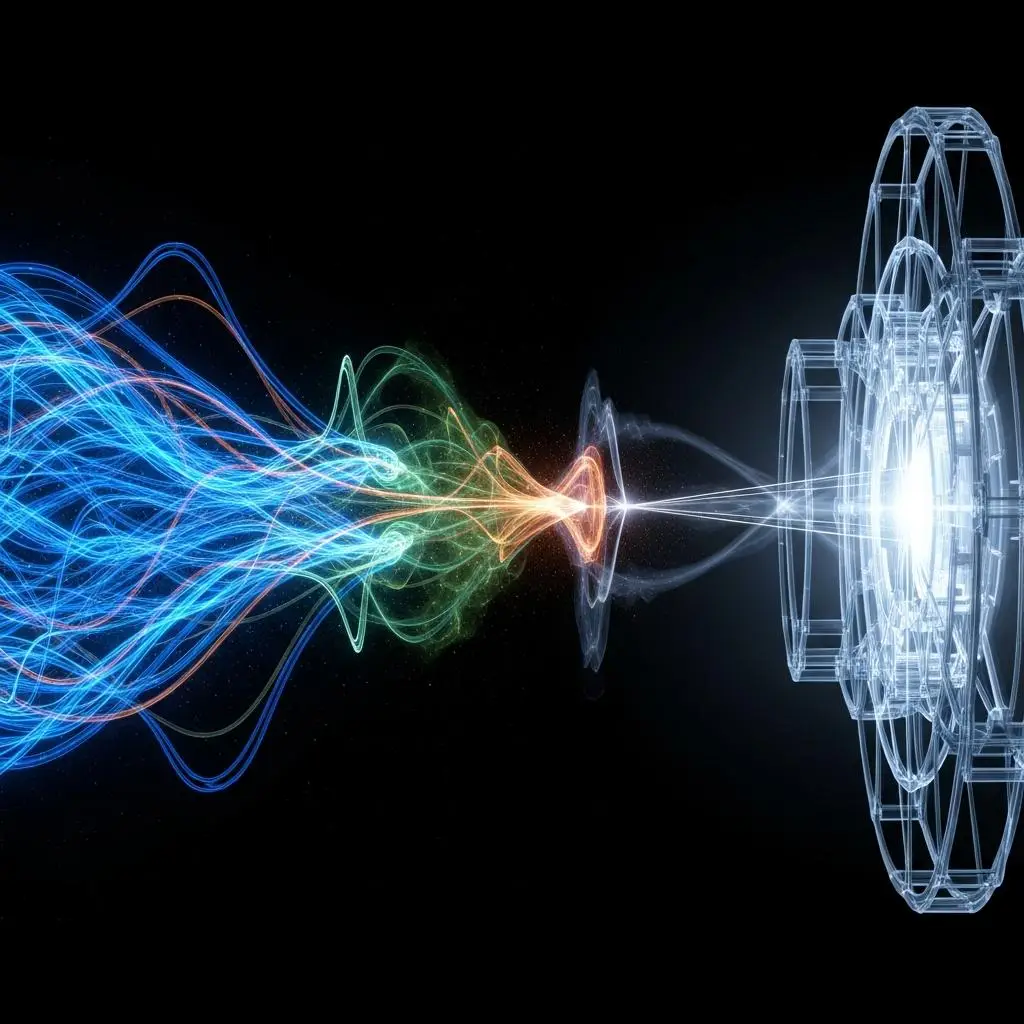

You’ve probably seen the headlines: “Quantum computers are finally here!” and “Breakthrough in quantum error correction!” They paint a pretty picture of fault-tolerant machines ready to solve everything. But if you’re actually *in* the trenches, wrestling with NISQ hardware, you know that’s a decade away. The real battle, the one happening right now, isn’t about building a million perfect qubits. It’s about coaxing usable results out of the noisy, imperfect beasts we have.
Measurement Hygiene: What You Can Run on Today’s NISQ Hardware
This is about what you can actually *run* on your IBM Fez, your Rigetti Aspen, your IonQ Forte, *today*. We’ve been hammering on these machines, trying to do things that the textbooks say are impossible. We’re talking about things like recovering ECDLP keys – not toy problems, but real, non-trivial instances. And the vast majority of our success, the stuff that makes the benchmark numbers actually look good, hinges on one thing: cleaning up our act at the measurement stage.
Measurement Hygiene for NISQ Hardware: What to Expect
Think about it. You spend hours, days, setting up a circuit. You meticulously calibrate. You’ve got your gate fidelities, your coherence times – the whole nine yards. Then you hit `run`. And what comes out? A mess. Not a structured mess that some fancy algorithm can fix with brute force, but a *contaminated* mess. This isn’t just about thermal noise or shot noise. We’re talking about what we’re calling **Unitary Contamination**.
Measurement Hygiene Strategies for NISQ Hardware
We managed a 21-qubit ECDLP recovery. By meticulously analyzing the measurement shots and down-weighting or outright excluding data from states exhibiting anomalous statistics (think those stray signals, the ones that don’t fit the expected pattern of your stabilizers), we effectively boosted the SPAM fidelity of the entire measurement process. The key isn’t to have perfect qubits; it’s to have a robust method for *identifying* and *isolating* the influence of the imperfect ones.
NISQ Hardware Measurement Hygiene in Practice
So, here’s your testable hypothesis: The practical performance boundary of NISQ hardware for non-trivial cryptographic tasks is not set by gate count or coherence times alone, but by the implementation of a rigorous, program-aware measurement hygiene protocol that actively identifies and mitigates the impact of rogue qubits and anomalous readout events.
For More Check Out