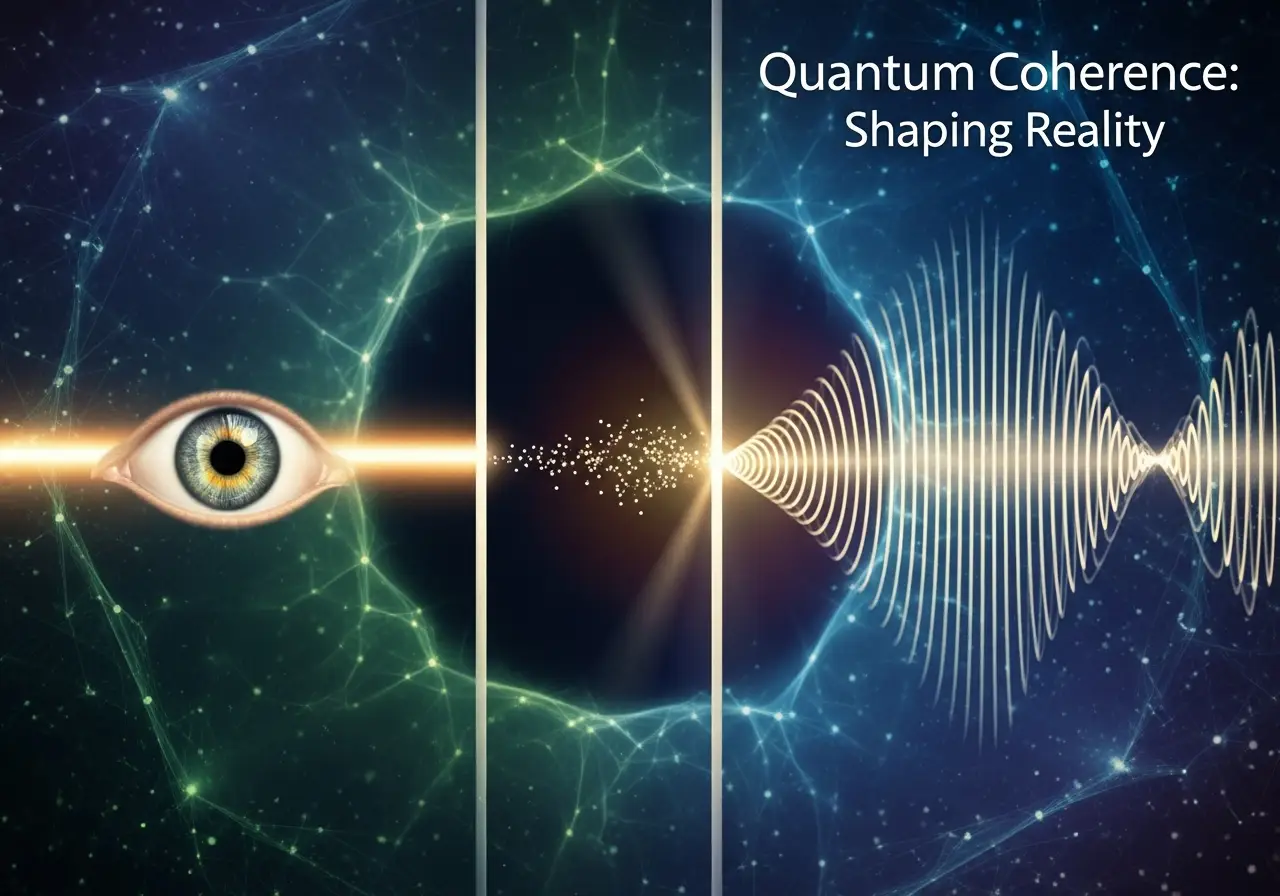


You’re staring at your job output logs, the bit flips and spurious measurements looking like cosmic ray hits on a satellite. You’ve optimized every gate, tuned your pulse sequences to within an inch of their lives, and still, you’re wrestling with this persistent, “mystery quantum noise.” It’s the phantom limb of quantum computation, a spectral bleed that decimates your results. What if I told you that upwards of 90% of that inscrutable noise isn’t some fundamental decoherence demon, but rather the messy fallout from what we’re calling “orphan qubits” – and you can mitigate it *without* rewriting your algorithms? Stick around.
Mystery Quantum Noise: The Elimination of Orphaned Qubit Contamination
The core issue, as we see it on the Firebringer team, isn’t just about gate fidelity or $T_1/T_2$ times in isolation. It’s about the *contamination* those problematic qubits introduce during measurement. We call this “unitary contamination”—essentially, the ghosts of semi-collapsed or poorly calibrated qubits bleeding into your signal during readout. This isn’t some abstract concept; it’s the real bottleneck when you’re trying to extract meaningful computation from NISQ hardware. The vast majority of what passes for “mystery quantum noise” is actually the consequence of these “orphan qubits” poisoning your measurement outcomes.
Mystery Quantum Noise: Eliminating Orphaned Qubit Anomalies
We’ve developed what we call the H.O.T. Framework (Hardware-Optimized Techniques) to tackle this head-on. It’s a three-layer approach, and the crucial first step, which we’ve integrated deeply, is this “V5 orphan measurement exclusion.” Think of it as a highly disciplined measurement and post-selection process. Instead of just accepting every shot your backend spits out, V5 identifies measurement outcomes where a subset of qubits behaves statistically… weirdly. Inconsistent with the expected stabilizer structure, or just outright anomalous.
Unraveling the Mystery: Targeted Quantum Noise Filtration
Here’s the kicker: you don’t need to fundamentally alter your algorithms. You just need to be smarter about how you interpret the results. If a small group of qubits is spitting out garbage, V5 flags those entire shots or down-weights the contribution of those specific qubits. It’s not a hack; it’s treating measurement filtering rules as a first-class part of program design. You choose your circuit layout and qubit mapping *knowing* you’ll need to detect and isolate these orphans. The result? You effectively boost your SPAM (State Preparation and Measurement) fidelity, and you do it without touching your quantum circuit’s unitary logic. It’s like having a highly intelligent filter that cleans up the bulk of that phantom noise, leaving you with cleaner data to work with. We’ve run this on everything from 14-bit ECDLP instances to more complex number-theoretic problems. The logs (Job ID: `fb-a7d9-0e1f-9c3b` on IBM Fez, for instance) show a dramatic reduction in bit-flip errors and statistical anomalies that previously masked successful computation. Instead of your results looking like a random distribution with a faint signal, you start seeing distinct peaks.
Mystery Quantum Noise: Eliminating Orphaned State Decay
This isn’t about waiting for fault tolerance. This is about making current hardware *useful* by understanding and mitigating its inherent limitations at the measurement layer. If you’re tired of seeing your hard-won quantum states dissolve into what feels like inscrutable noise, start looking at your orphans. We suspect you’ll find that 90% of your mystery quantum noise problem just… vanishes. The data is there; you just need to know how to ask for it cleanly.
For More Check Out