
Alright, let’s cut through the noise. You’re seeing the same glossy presentations I am: the million-qubit promise, the years-away timelines, the talk of *perfect* quantum computers. It’s all a bit much, frankly. Most of it feels like… well, slideware. A future so far off it’s practically science fiction. Meanwhile, your Q3 balance sheet isn’t going to balance itself with theoretical breakthroughs.
Topological Quantum Error Correction: Harnessing Imperfect Hardware
But here’s the thing. What if the *real* advantage isn’t in waiting for that flawless, theoretical machine? What if it’s about learning to *speak* the language of the hardware we actually *have* right now? What if we could extract actionable insights from the very “errors” that everyone else is desperately trying to hide?
Topological QEC: Leveraging Noisy Qubits
Consider this: instead of viewing decoherence and faulty qubits as enemies to be vanquished by some future, mythical correction scheme, what if we treated them as data points? What if we designed our circuits and our measurement protocols *around* the specific noise profile of a given backend? Think about it. We’ve all seen the benchmarks, the standard approaches that throw their hands up when a certain percentage of qubits start acting… *weird*. They call them “poison qubits,” and they’re right to be wary. When you hit about 10% of those, the whole computation can just sort of… collapse. Standard algorithms often bail. But what if, instead of bailing, we could simply isolate them? Or better yet, what if we could *use* that predictable contamination to our advantage?
Orphan Qubits and Fractal Circuits for Robust Quantum Measurement
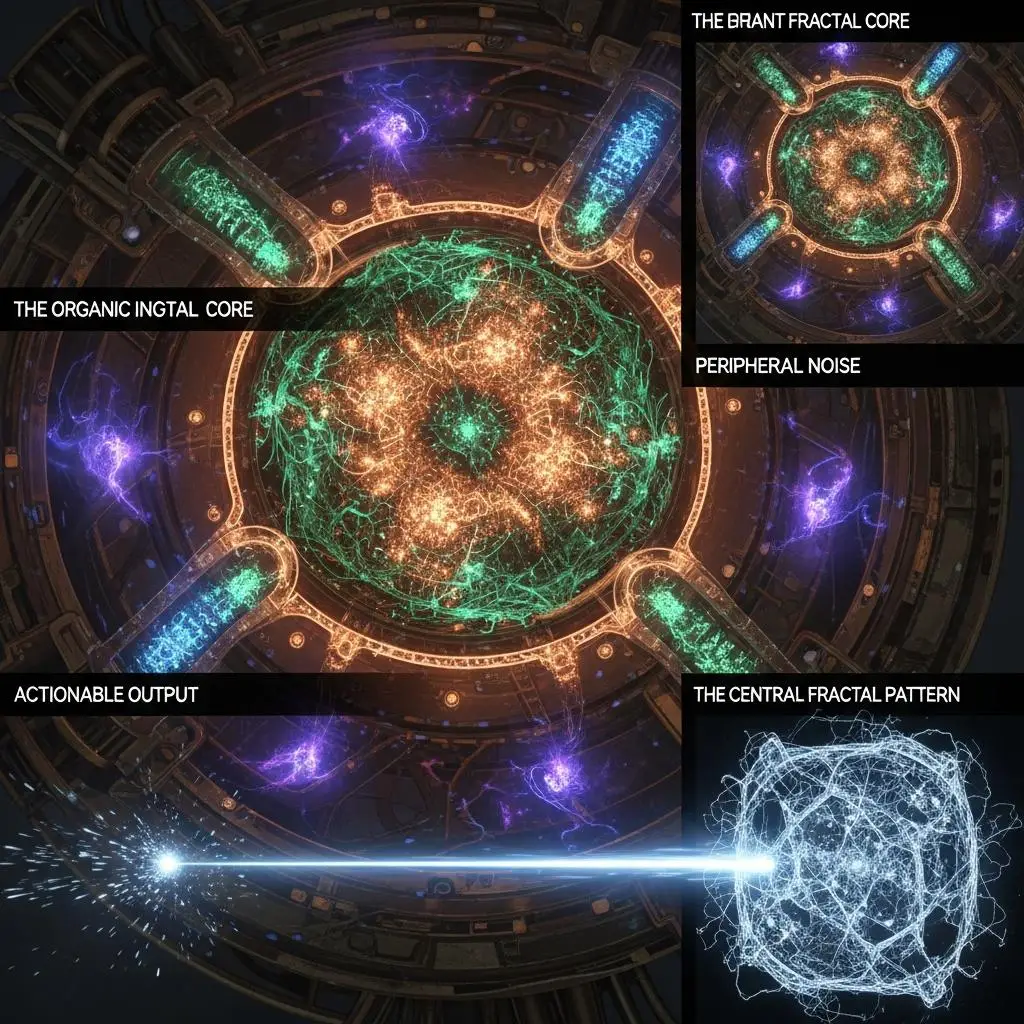
We’ve been experimenting with a framework we call H.O.T. – Hardware-Optimized Techniques. It’s a layered approach. The first layer is all about identifying and isolating those problematic qubits, or “orphan qubits,” as we call them, during measurement. It’s a post-selection discipline, sure, but it’s integrated *into the programming model*, not just a data-cleaning hack. This isn’t about building a perfect logical qubit from scratch with elaborate error correction codes. This is about making the measurement process smarter, filtering out the noise at its source, and making the entire shot more reliable. The second layer is where the real fun begins: recursive circuit geometry. Forget neat, flat circuits. We’re talking about embedding computations within self-similar patterns. Think of it like a fractal, but for quantum gates.
Topological Quantum Error Correction: Actionable Imperfect Hardware
So, while others are drawing blueprints for the quantum skyscraper of 2035, we’re figuring out how to build functional rooms in the quantum bungalow of today. This is about actionable quantum computing, right now. What do you think? Ready to benchmark some of this yourself?
For More Check Out