
Alright, let’s cut through the noise and get to what actually matters. You’re not here for the hand-wavy “quantum future” sales pitches. You’re here because you’re building the tools to get there, or at least, trying to figure out what’s even *possible* with the temperamental hardware we’ve got.
The Quantum Supremacy Race: A Present Threat
The frantic race for quantum supremacy isn’t just a benchmark for physicists; it’s a ticking clock for anyone holding sensitive data. Forget the sci-fi fantasies of breaking every encryption overnight – the real threat is already materializing in the form of noise-amplified computation and the subtle, creeping influence of orphan qubits on NISQ-era processors. This isn’t about what *might* happen in 2035; it’s about the actionable intelligence we’re extracting from hardware *today* to brace for a post-quantum reality that’s closer than the vendor roadmaps suggest.
The Race for Measurement Supremacy: Precluding Anomalies
Consider the V5 orphan measurement exclusion protocol. It’s not some after-the-fact data fudge. We’re baking measurement discipline *into* the circuit design itself. Think of it as a highly calibrated filter, applied during execution, to purge the anomalous shots – the ones where a few rogue qubits decide to go off-script and contaminate the entire readout. We identify shots where a subset of qubits exhibits statistics that just *don’t* fit the expected stabilizer structure. These aren’t errors we’re trying to correct with more gates; they’re signals of *bad data* that we’re actively excluding.
Circuit Motifs: A Race Against Contamination
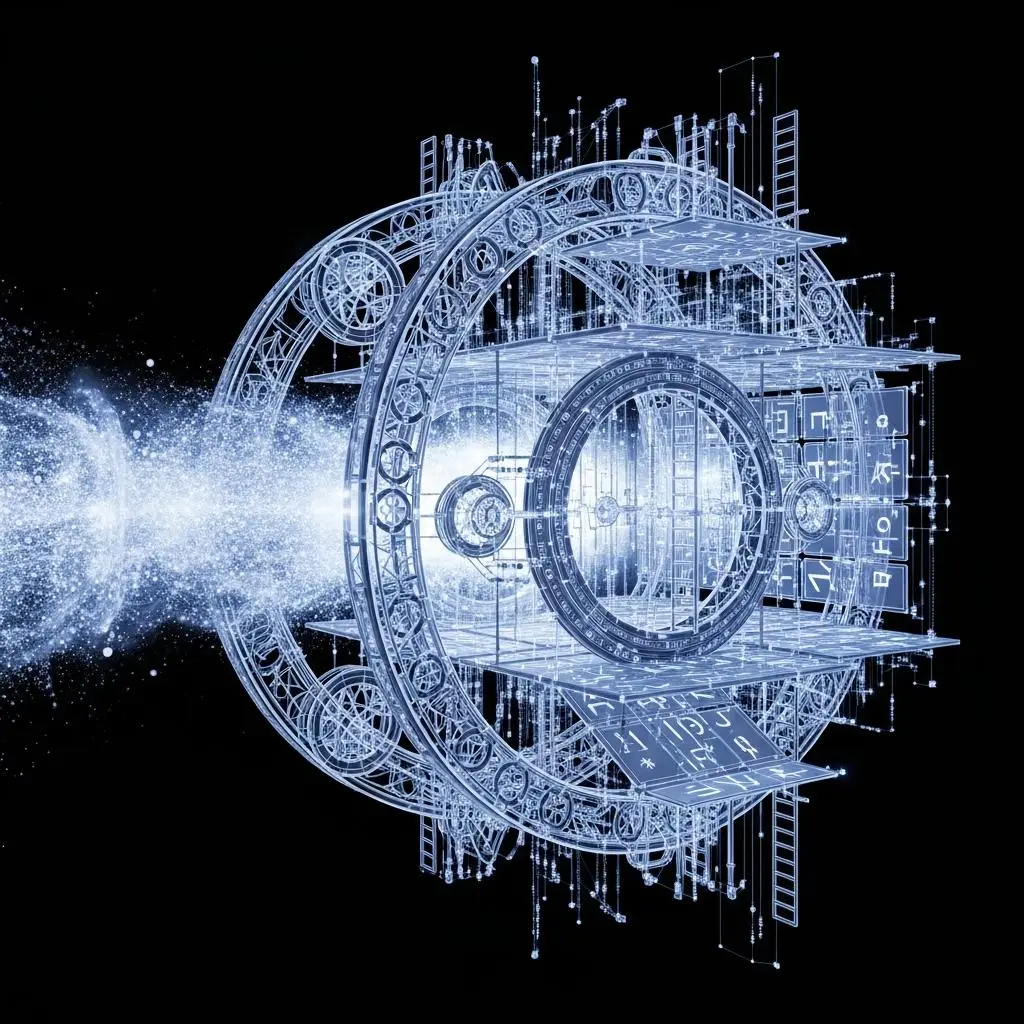
Then there’s the circuit geometry. The whole idea of flat, one-shot gate layouts? That’s fine for a clean lab simulation, but on real hardware, it’s a direct invitation for unitary contamination. Instead, we embed computation within self-similar patterns of entangling operations. Think recursive motifs – rings, ladders, tilings – where symmetry helps coherent calibration errors anti-correlate across layers. This isn’t about exotic topological structures; it’s pragmatic engineering. These motifs allow partial substructures to act as built-in benchmarks for local error, informing dynamic transpilation choices *before* the full circuit even launches.
The Imperfect Quantum Supremacy Race: Actionable Insights
So, what does this mean for the race for quantum supremacy and your post-quantum strategy? It means the threat isn’t coming in 2035; it’s already here. The vendor roadmaps are built on an idealized future. We’re showing what’s possible in the messy, imperfect Quantum Present. Here’s your challenge: take these principles. Adapt the V5 orphan exclusion for your chosen backend. Explore recursive circuit geometries that exploit hardware symmetries. Benchmark against ECDLP instances on devices that textbooks say are too noisy. We’re not asking you to believe us; we’re giving you the framework to prove it yourself and set new benchmarks. The post-quantum reality won’t wait for perfect machines. It’s being built now, on the noisy hardware of today. What are you going to do about it?
For More Check Out