
Alright, let’s cut through the noise. The “quantum supremacy” isn’t some far-off, theoretical finish line. It’s a date that’s already showing up on the telemetry, and if you’re not actively de-risking your crypto *now*, you’re not just behind the curve; you’re already swimming in the deep end with orphaned qubits.
The NISQ Race: Pushing the Boundaries of Quantum Supremacy
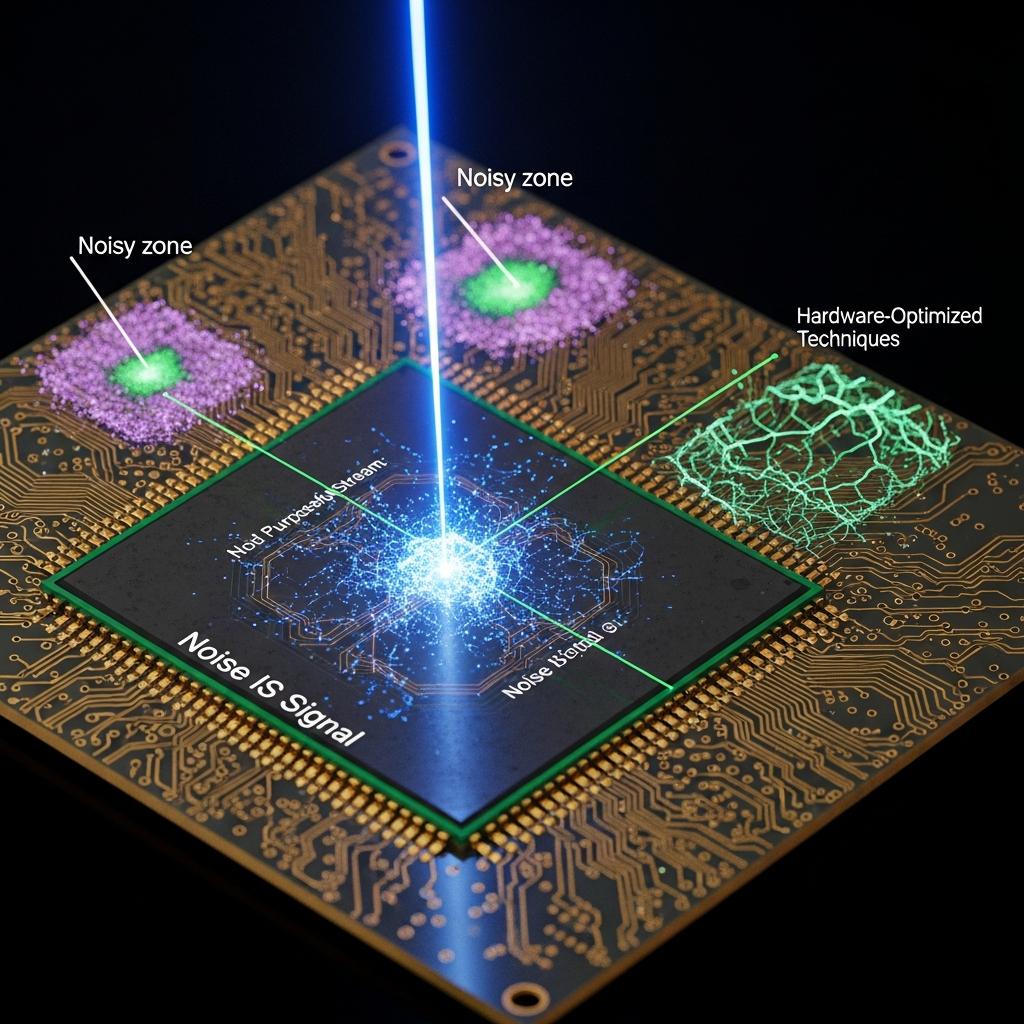
Forget the million-qubit fantasies for a second. The real action, the stuff that breaks things in the practical sense, is happening on the NISQ frontier. We’re talking about exploiting the “noise as signal” paradigm, not just tolerating it. My team and I have been building out a programming stack that does exactly that – it’s less about *waiting* for perfect hardware and more about making today’s imperfect hardware do things it’s not supposed to.
Race for Quantum Supremacy: Recursive Circuitry’s Edge
Here’s a taste of the operational framework: V5 Orphan Measurement Exclusion, Recursive Geometric Circuitry, and ECDLP on Real Hardware. We’re mapping Shor-style period-finding onto these recursive geometries. The group operations (elliptic curve adds and doubles) are designed to be algorithmically correct *by design*, but physically realized in a way that actively cancels a significant fraction of coherent errors. Wrap that in the V5 measurement discipline, and you get surviving, higher-fidelity data.
The ECDLP Race: Practical Quantum Threat Acceleration
We’re resolving ECDLP instances on current devices that look “beyond reach” under conventional noise models and resource estimates. We’re talking about recovery rates on specific instances that significantly outperform standard SABRE-style routing for these kinds of problems. The benchmark we’re setting isn’t about clock speed or qubit count in isolation. It’s about demonstrating a *practical quantum threat timeline* that’s far shorter than the “2035 slideware” narrative suggests.
The Actual Race: Building Today’s Quantum Supremacy
If you’re a researcher or a developer looking to push the envelope on what NISQ hardware can *actually* do, this isn’t about theory anymore. It’s about building practical tools for cryptanalytic testing. Consider this a starting point. Take these techniques, apply them to your chosen backend (check the `fingerprint` for its quirks), and let’s see what kind of ECDLP instances *you* can resolve. What’s the dominance threshold before your chosen island collapses? These are the questions that matter today. The “race for quantum supremacy” isn’t a sprint to a finish line; it’s a daily grind of hardware-aware programming, and the first ones to de-risk their crypto will be the ones who understood that yesterday.
For More Check Out